“The greatest threat to our planet is the belief that someone else will save it.”
Robert Swan
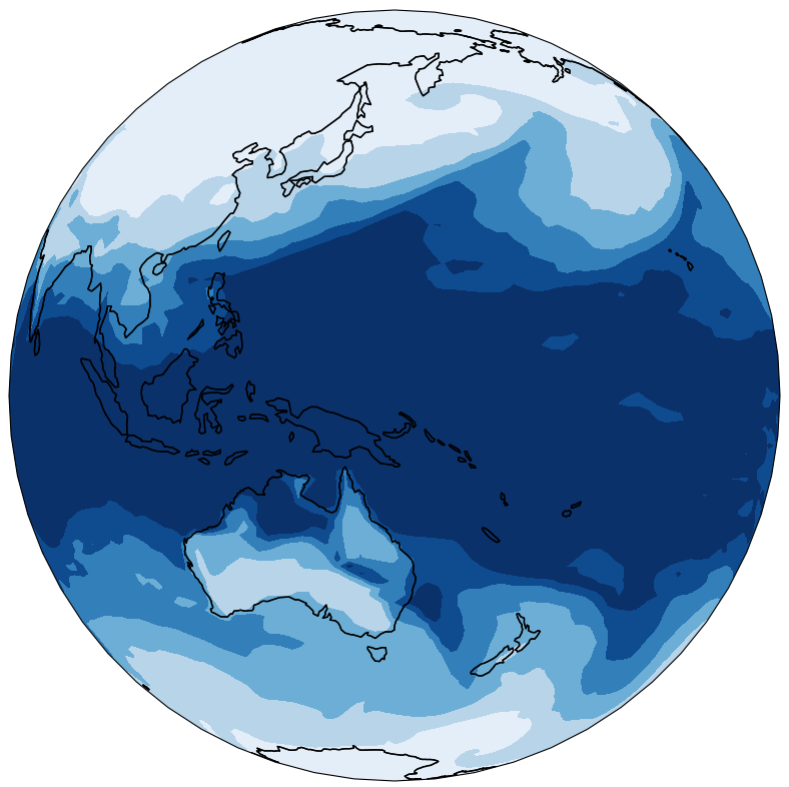
The increase in the world’s average temperature affects not just our environment — like rising sea levels and more extreme rain or droughts — but also touches every aspect of our lives, from the water we drink and the energy we use, to our farms and food supply. My research is focused on understanding these changes, particularly how climate change is leading to more severe storms and compound events. The knowledge gained is key to planning and constructing resilient infrastructure, such as roads, bridges, and buildings, designed to withstand these evolving climate conditions. This work aims to improve the accuracy of Regional Climate Models (RCMs) by incorporating advanced bias-corrected boundary conditions, enhancing our ability to predict and prepare for extreme weather events and ensuring greater water security in a changing climate.
Understanding Climate Change for Global Resilience
As climate change accelerates, its impacts are felt unevenly globally, with developing nations facing the most significant challenges. These communities are on the frontline, confronting the direct consequences of rising temperatures, such as altered rainfall patterns and increased frequency of extreme weather events. My research is anchored in pursuing sustainable water management strategies and understanding climate dynamics to mitigate these impacts. I aim to develop actionable insights that empower vulnerable regions to adapt and thrive in a changing climate.

Building Resilience Against Climate Extremes
The reality of climate change brings a surge in extreme weather events, including unprecedented storms and floods. Recognizing and preparing for these shifts is crucial. My work focuses on enhancing the predictive capabilities of existing models to better anticipate these events, thereby enabling the design of robust water management systems. Through collaboration with international partners, I support efforts to strengthen global water security, ensuring communities can withstand and recover from the impacts of climate extremes.
Enhancing Predictions with Accurate Regional Datasets
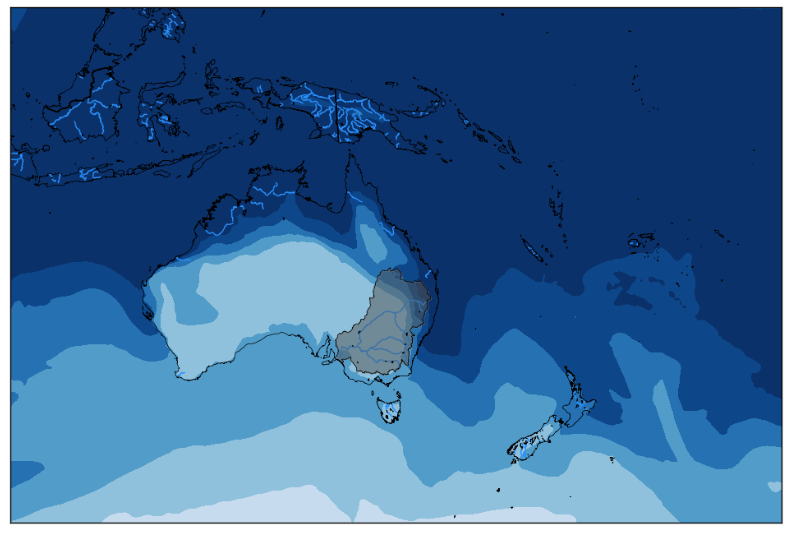
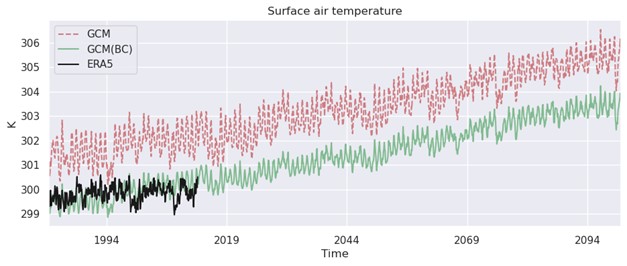
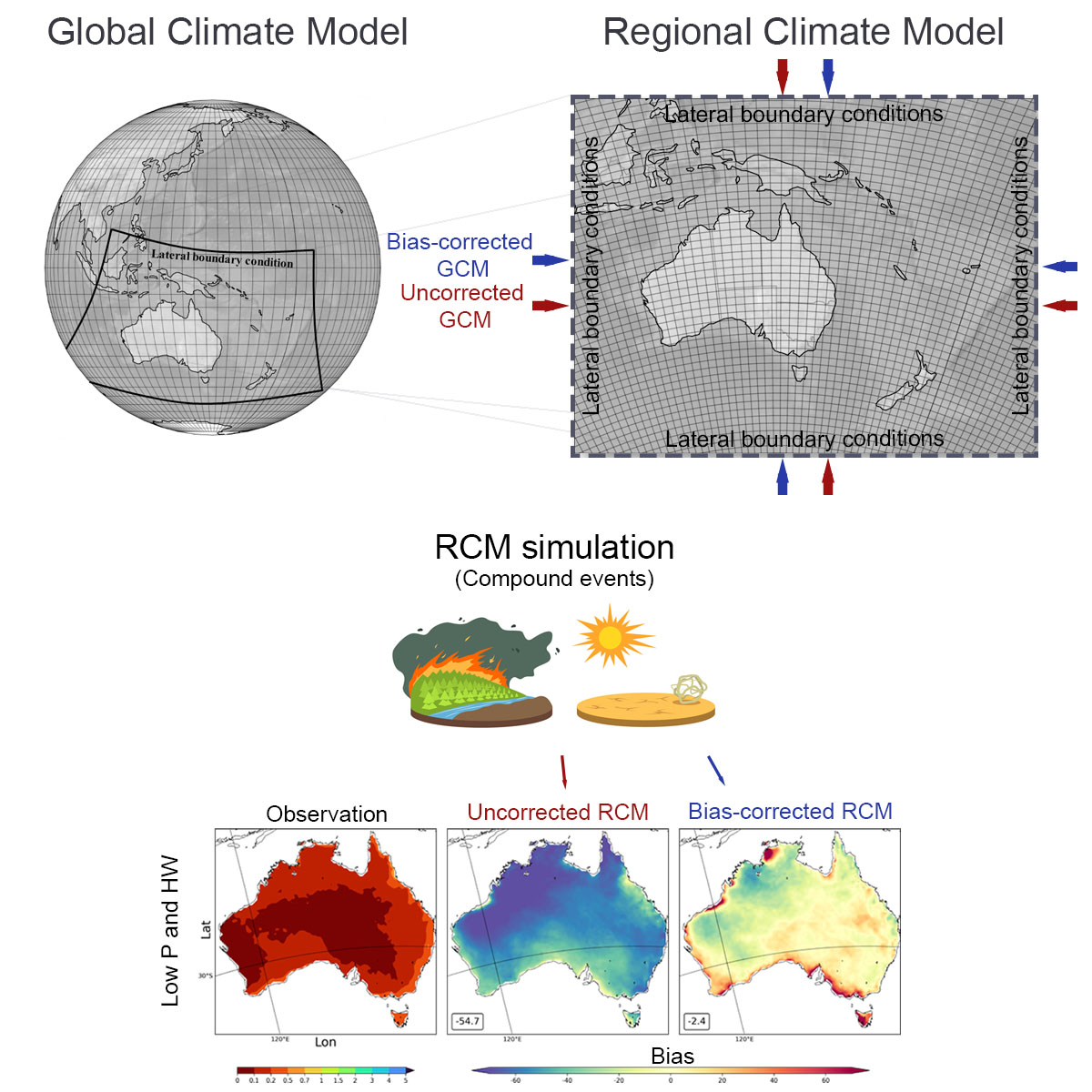
As extreme weather events become more frequent and intense, it’s necessary to simulate them accurately to minimize the damage they can cause. One of the challenges in predicting these events is that our primary tools for understanding global weather patterns – known as global climate models, or GCMs – aren’t detailed enough for specific regions. To address this, I use regional climate models (RCMs) with bias-corrected boundary conditions, which take data from GCMs to provide more localized predictions. By conducting regional climate modeling experiments, we can better understand how much extreme storms might increase. This information can help establish a framework for designing infrastructure, like roads, bridges, and buildings, in a warming world.

Innovation Through Application Tools
In response to the complex challenges of climate modeling, I have developed an open-source tool that enhances the accuracy of regional climate models. This software improves the accuracy of climate data by integrating global datasets, making it an invaluable resource for environmental impact assessments and climate research. By bridging the gap between complex climate data and practical application, this tool supports the climate change community in developing more informed strategies for adaptation and resilience.
Project
2025
Sub-Hourly Extreme Precipitation (SHEP)
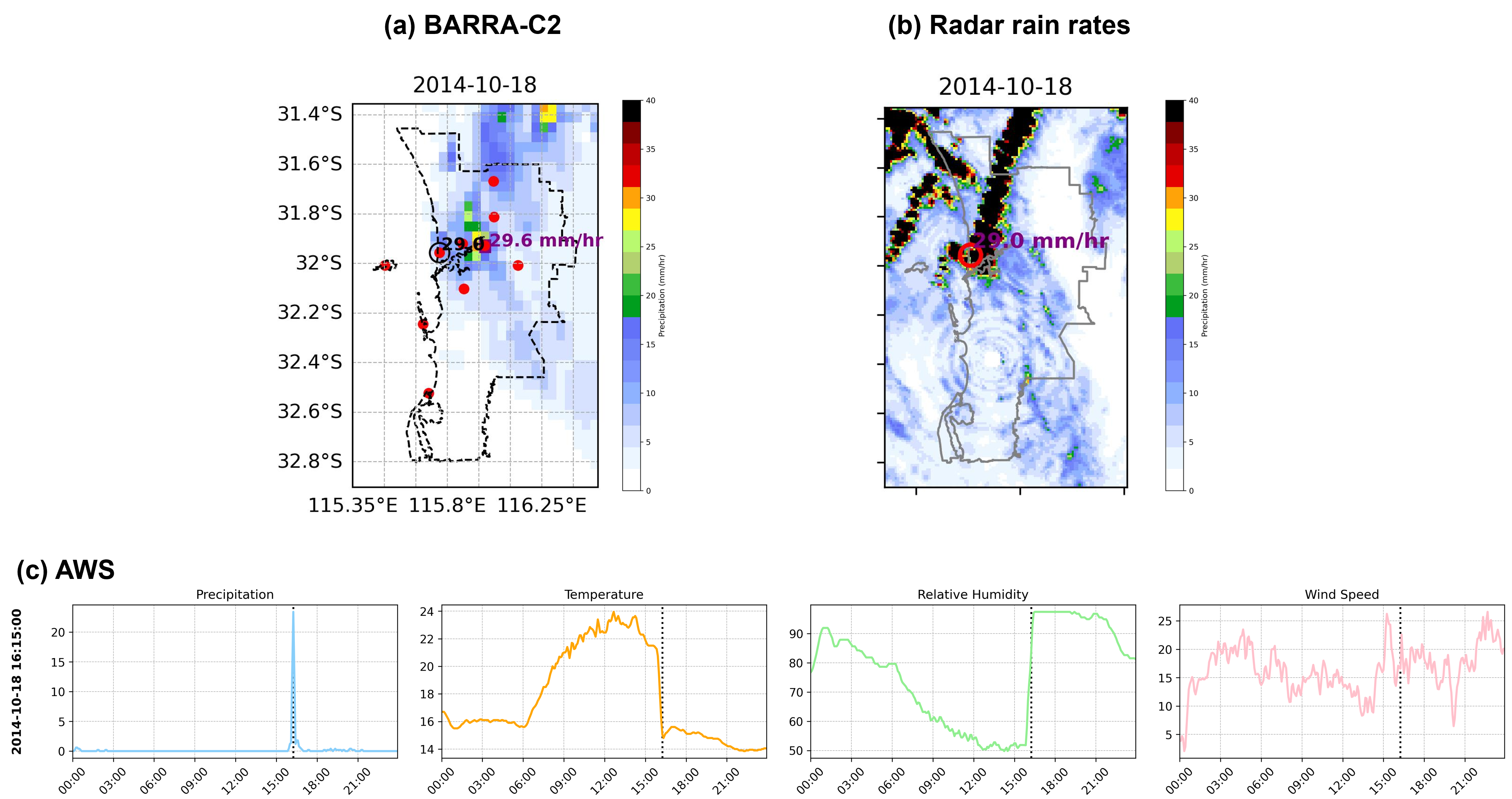
The SHEP project aims to improve understanding and projection of sub-hourly extreme precipitation in urban areas across Australia and New Zealand. It combines high-resolution observational data (AWS, radar, ERA5) with convection-permitting model (CPM) simulations to analyse historical rainfall events and assess changes under future warming scenarios. The project uses event-based and long-term approaches, including pseudo-global warming experiments and CMIP6/7 downscaling. By evaluating model skill and refining ensemble projections with AI/ML techniques, SHEP provides insights for urban flood risk management, informs stakeholder planning, and contributes to climate adaptation strategies, with applications for BoM, emergency services, and infrastructure agencies.
2023
Toward accurate RCM simulations for future projections
Enhancing the prediction of extreme events and their potential changes in climate patterns, particularly events like droughts and storms, hold significant importance for water resource managers and stakeholders. These events often result from complex interactions among atmospheric variables across time and space, significantly impacting water resource management. Therefore, it’s essential to improve modeling capabilities to better understand the physical relationships between these variables and anticipate their possible future changes. This project aims to generate more precise Regional Climate Model (RCM) future simulations and develop software that streamlines the simulation processes, enhancing predictive accuracy and efficiency.
2022
Nationwide characterised spatial-temporal behaviour of extreme
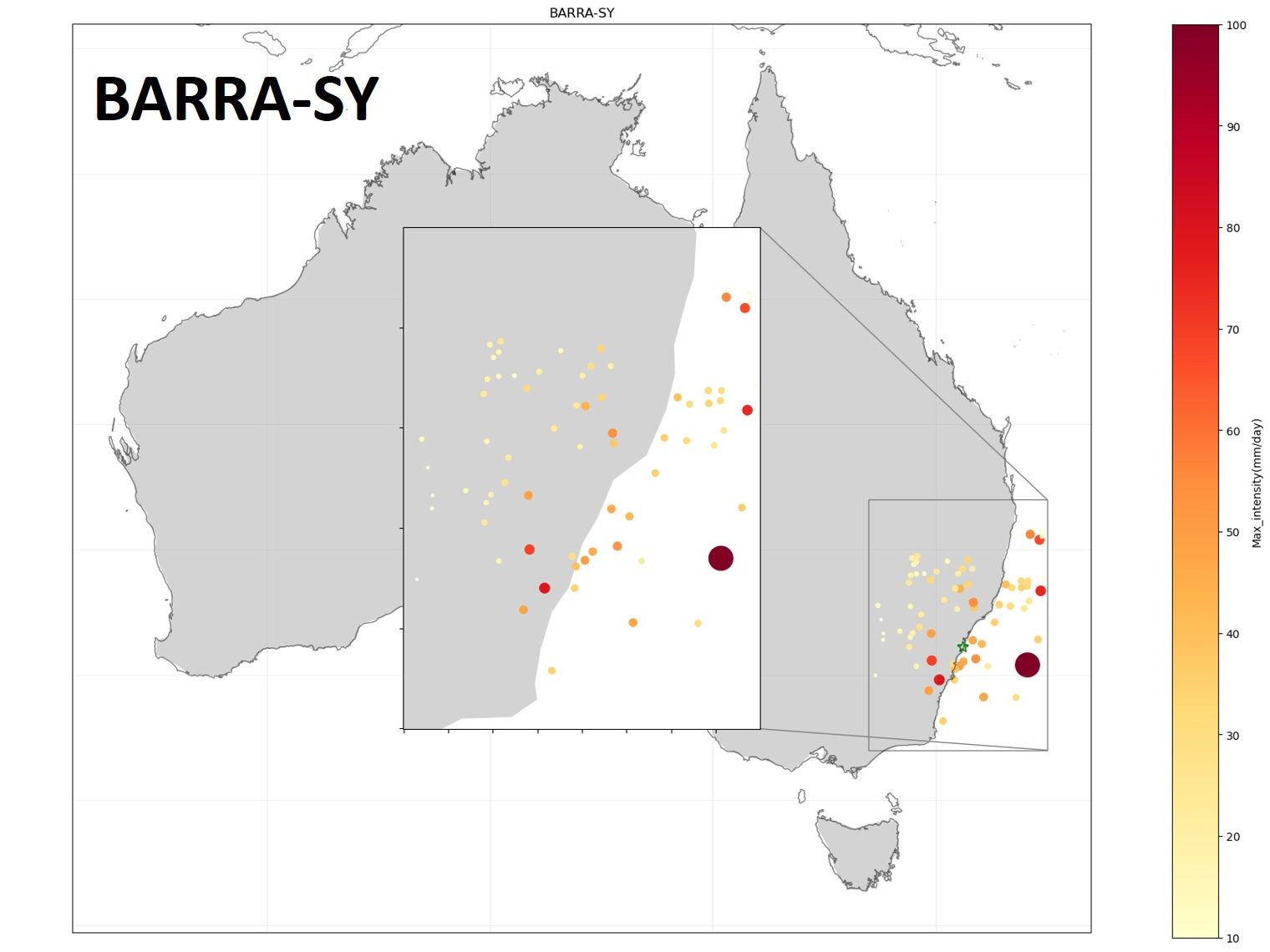
Changes in future flood events and water supply may incur social costs and mandate changes in management practices. This project aims to identify, track, and analyses individual storms to investigate the effects of changes in rainstorm frequency, duration, and size, which are all confounded in local or spatially aggregated time series.
2019
Comprehensive Bias Correction of RCM boundary conditions for simulation of hydrologic extremes
The primary focus of this project is to enhance the representation of high-impact hydrologic extremes through RCMs by utilizing carefully designed and comprehensive bias-corrected boundary conditions. To bridge the scale gap and mitigate systematic biases even in short-term periods, a sophisticated alternative for bias correction has been developed.
2018
Model of Integrated Impact and Vulnerability Evaluation of Climate Change
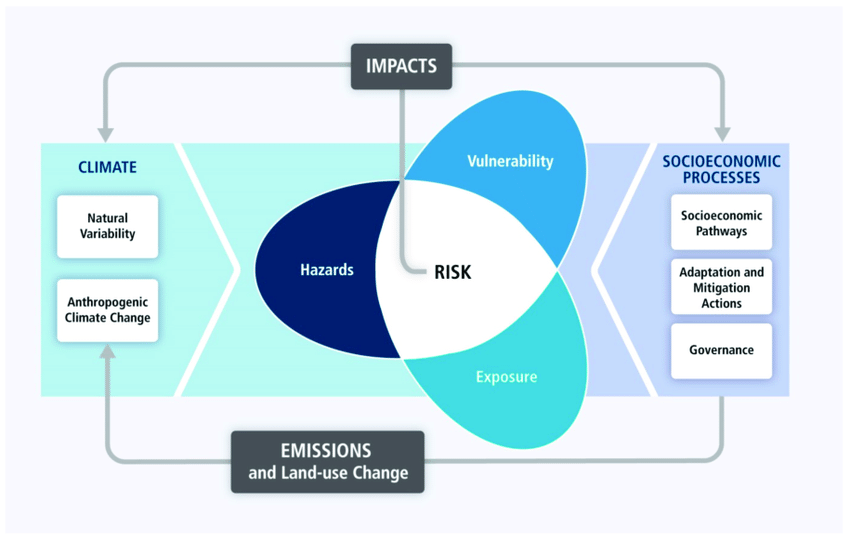
This project aims to establish realistic and effective adaptation plans, grounded in a thorough assessment of climate change impacts and vulnerabilities across various sectors. The methodologies to define risk-focused strategies for national-level adaptation have been developed to ensure that these strategies are effectively aligned with Korea’s specific climate challenges and needs.
 EcoSphereYoung