Correcting Systematic Biases in Regional Climate Model Boundary Variables for Improved Simulation of High-Impact Compound Events
Authors:
Youngil Kim, Jason Evans, and Ashish Sharma
Published year:
2023
Research purpose
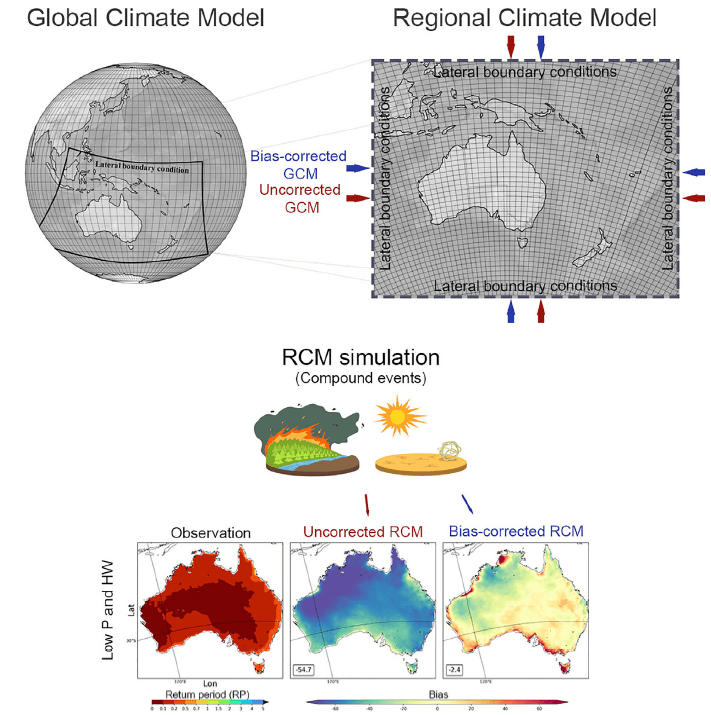
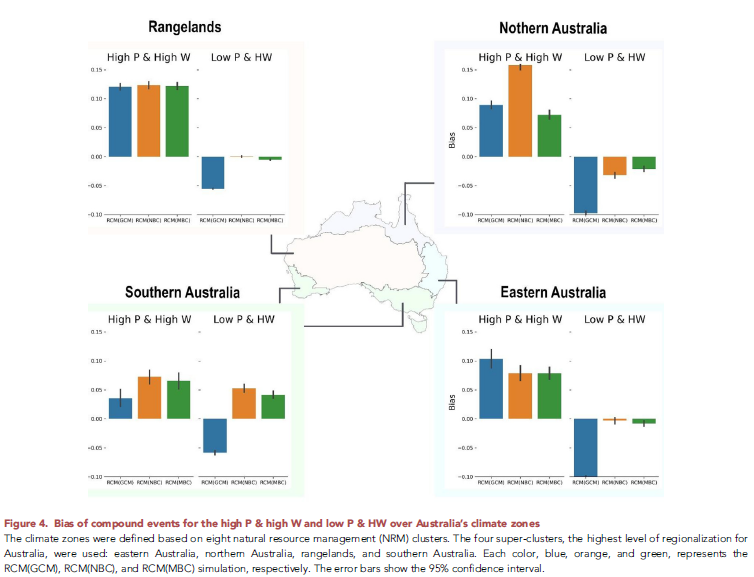
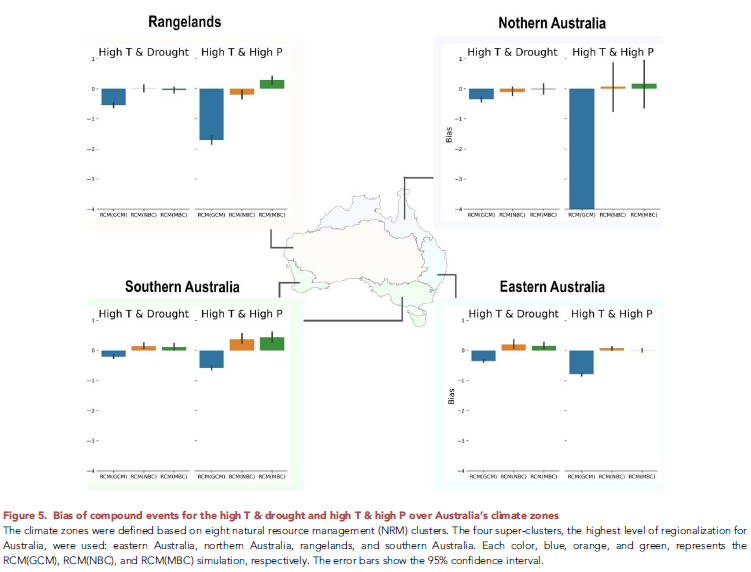
Although climate models have been used to assess compound events, the combination of multiple hazards or drivers poses uncertainties because of the systemic biases present. Here, we investigate multivariate bias correction for correcting systemic bias in the boundaries that form the inputs of regional climate models (RCMs). This improves the representation of physical relationships among variables, essential for accurate characterization of compound events. We address four types of compound events that result from eight different hazards. The results show that while the RCM simulations presented here exhibit similar performance for some event types, the multivariate bias correction broadly improves the RCM representation of compound events compared to no correction or univariate correction, particularly for coincident high temperature and high precipitation. The RCM with uncorrected boundaries tends to produce a negative bias in the return period of these events, suggesting a tendency to over-simulate compound events with respect to observed events.
Concluding mark
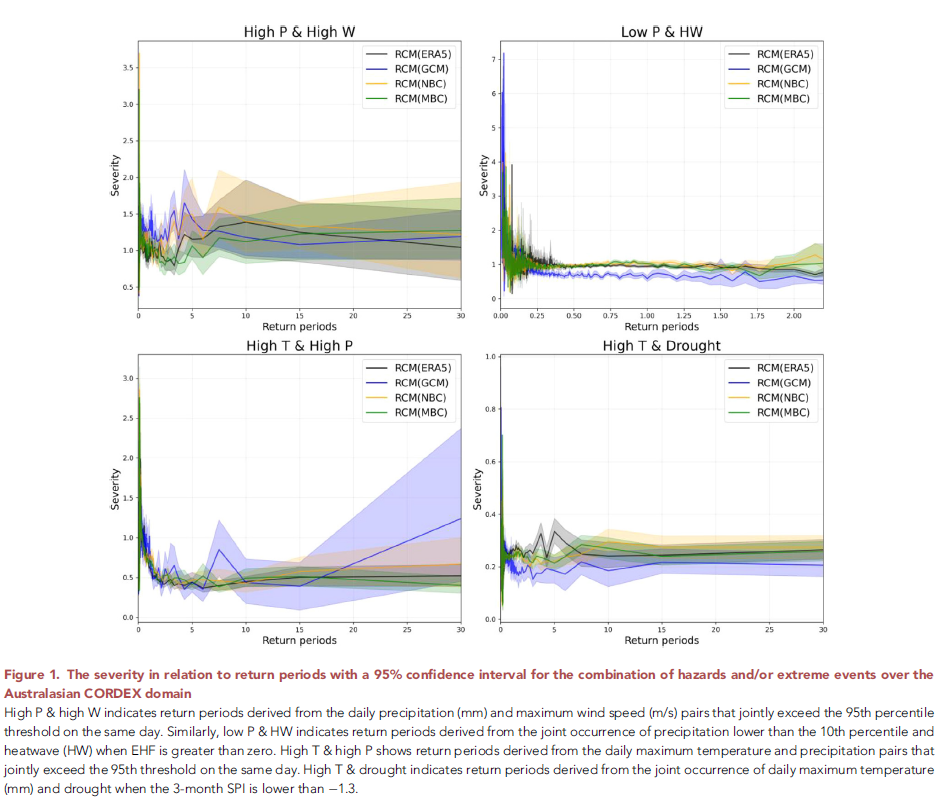
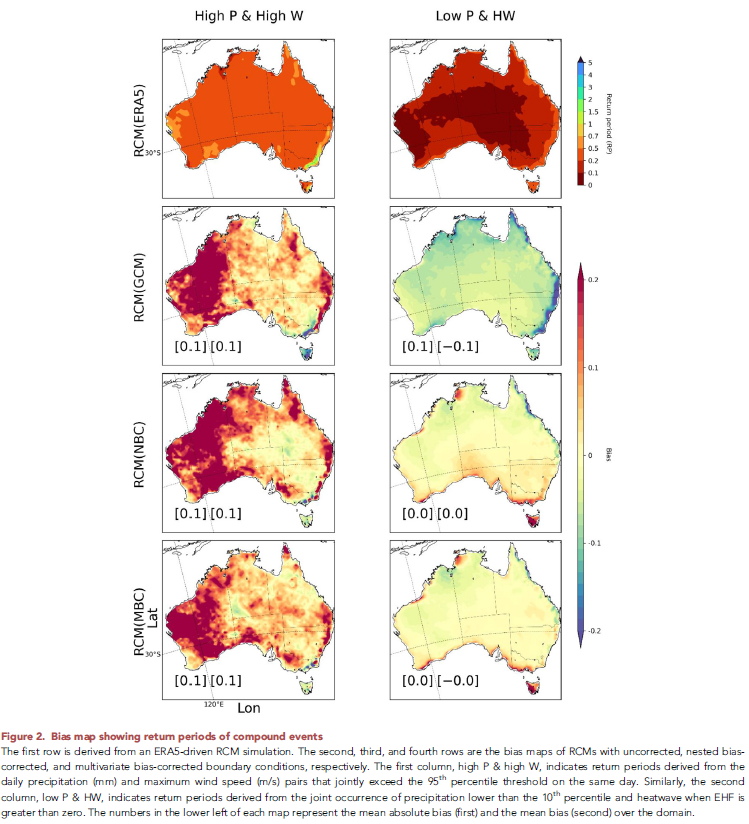
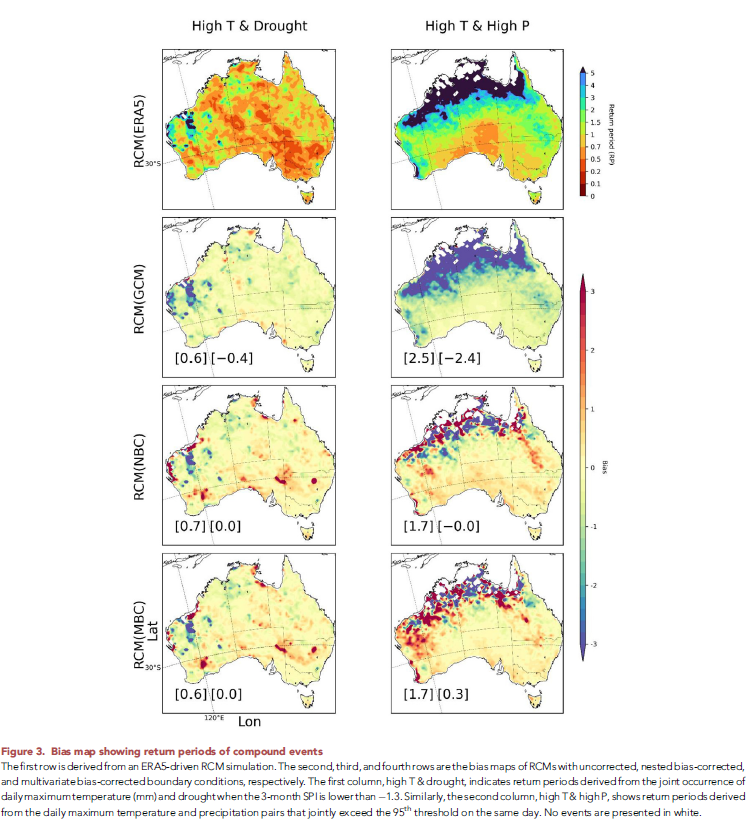
Extreme events and hazards can be amplified when multiple interactions among atmospheric variables are combined across multiple durations and locations. The combination of multiple hazards or drivers, often referred to as compound events, can lead to more severe socioeconomic damage than univariate extreme events. Recent studies have investigated the definition and classification of compound events using various climate model simulations; nevertheless, uncertainties remain due to insufficient temporal and spatial resolution. Therefore, high-resolution simulations are necessary for understanding the implications of these events, and RCMs are commonly used for this purpose. Although multiple studies have applied the univariate bias correction approach before dynamical downscaling, correcting a single variable at each grid cell can lead to physical inconsistencies among the variables, which may affect the model simulation and produce a biased relationship. Thus, this study investigated the impact of multivariate bias correction of the RCM boundary conditions with regard to compound events. The multivariate bias correction used here presented an improvement over the previous study and was better represented in the simulation of extreme events. We addressed four types of compound events chosen based on previous studies. The results showed that while the RCMs with uncorrected and bias-corrected boundaries produced similar biases in some event types, multivariate bias correction broadly represented the compound event frequency better, particularly for high temperature and high precipitation. The RCM with uncorrected boundaries tended to produce a negative bias in the return period, indicating that it presented extreme hazards more frequently than the ERA5-driven RCM simulation. This study provides preliminary insights into the possibility of using multivariate bias correction prior to RCM simulation for compound risk assessments.
 EcoSphereYoung