Selecting climate change scenarios for regional hydrologic impact studies based on climate extremes indices
Authors:
Seung Beom Seo, Young-Oh Kim, Youngil Kim, and Hyung-Il Eum
Published year:
2019
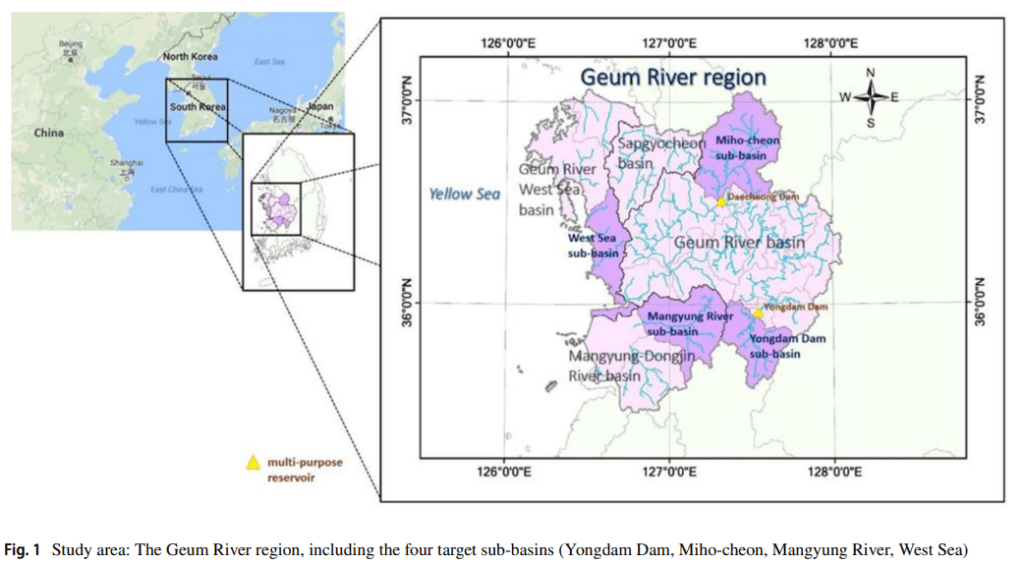
Research purpose
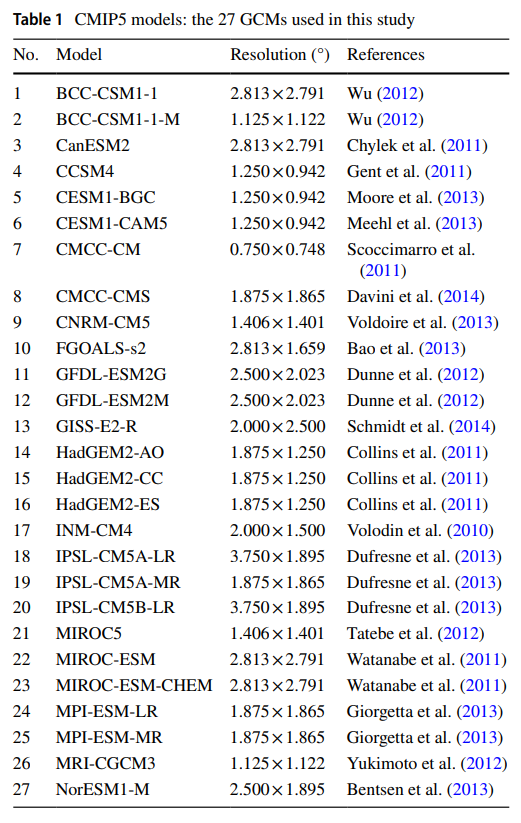
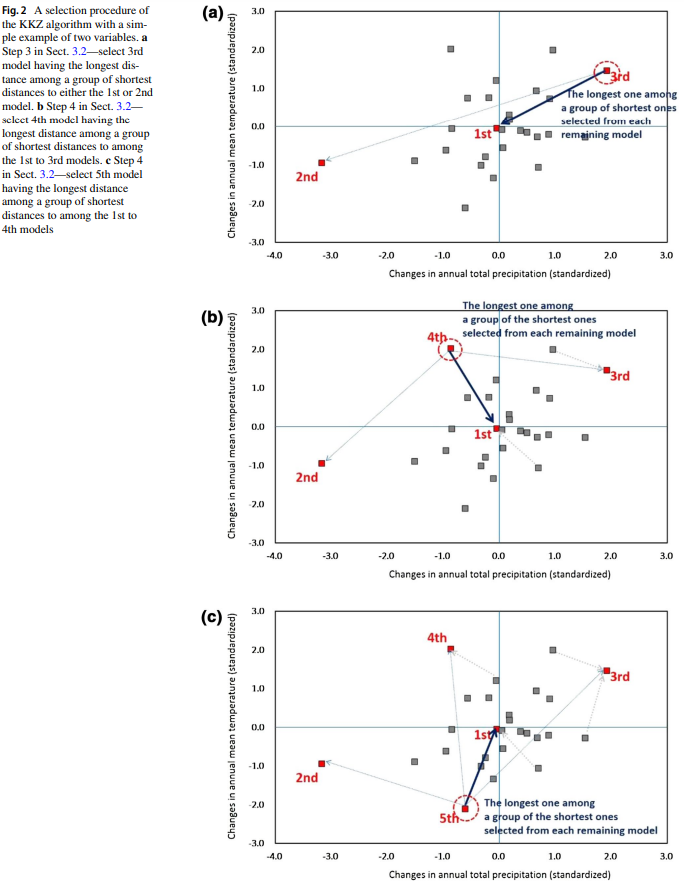
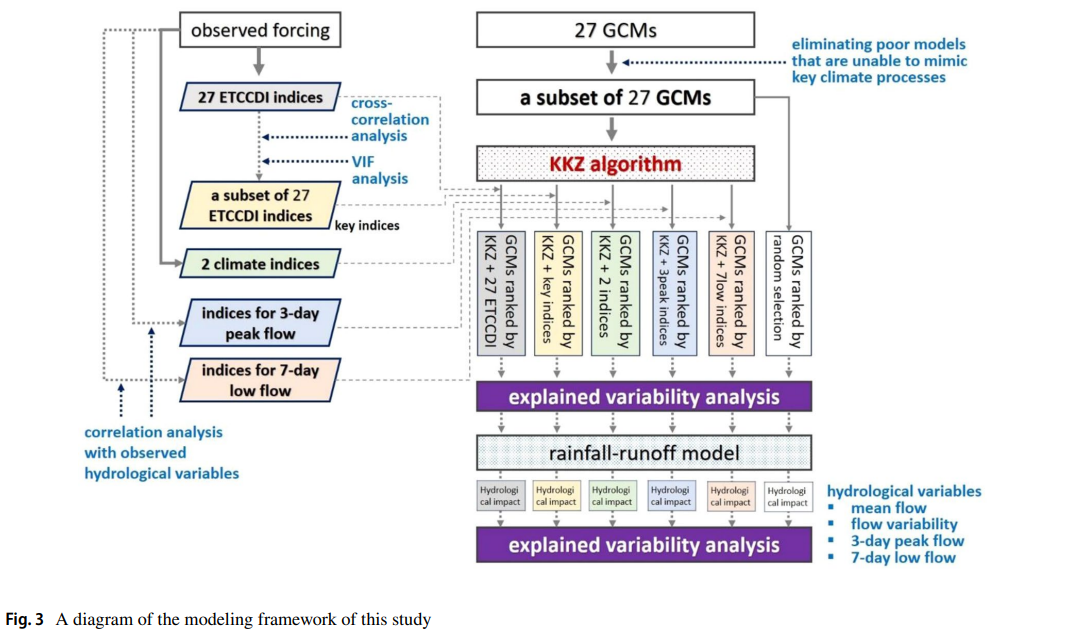
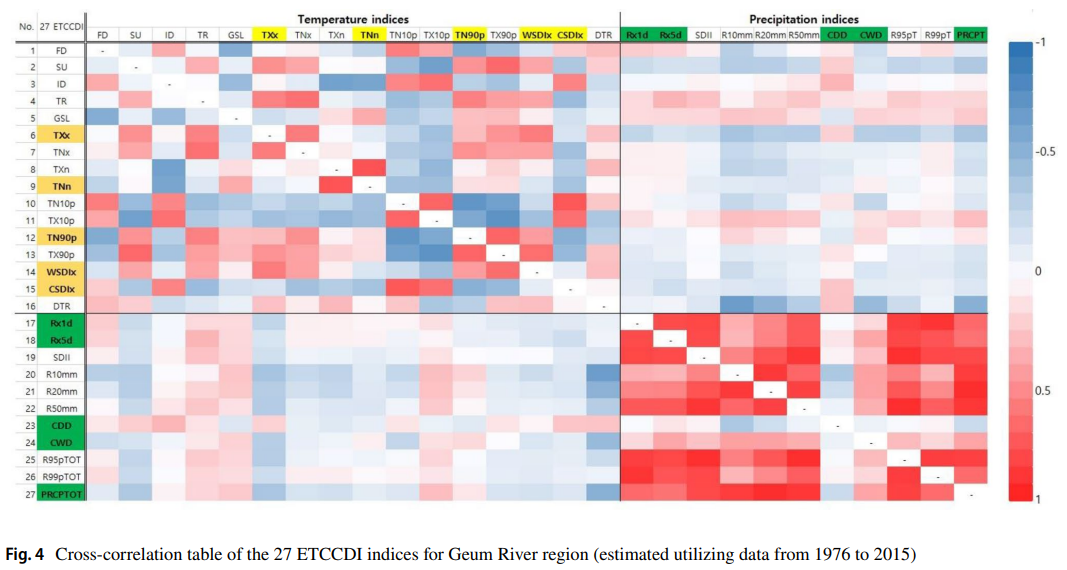
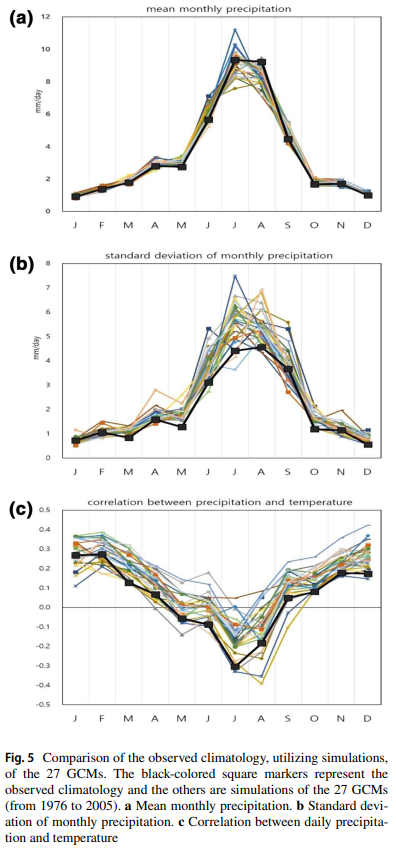
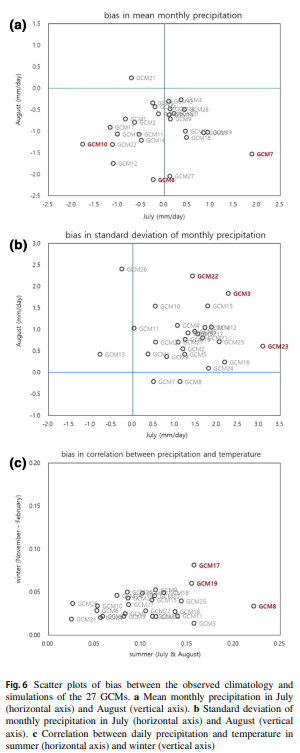
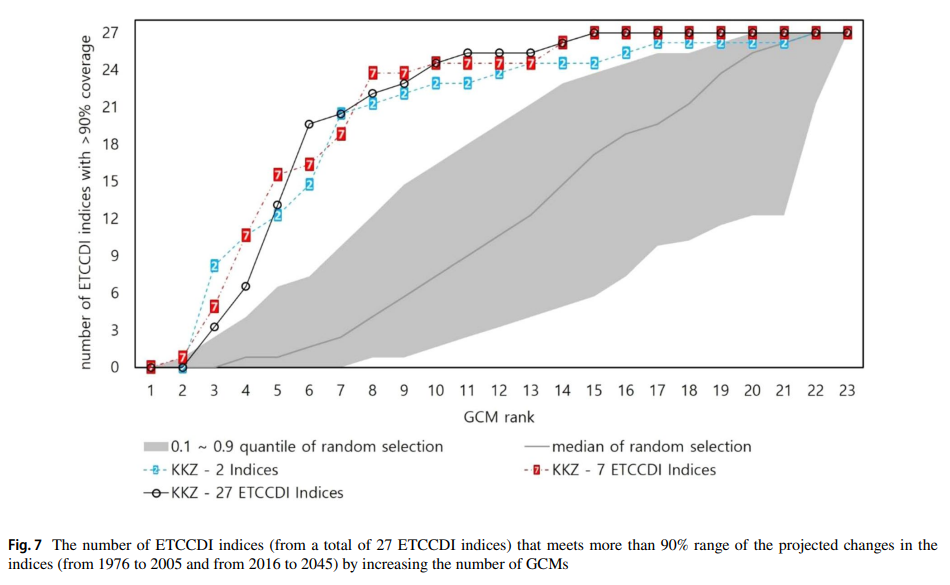
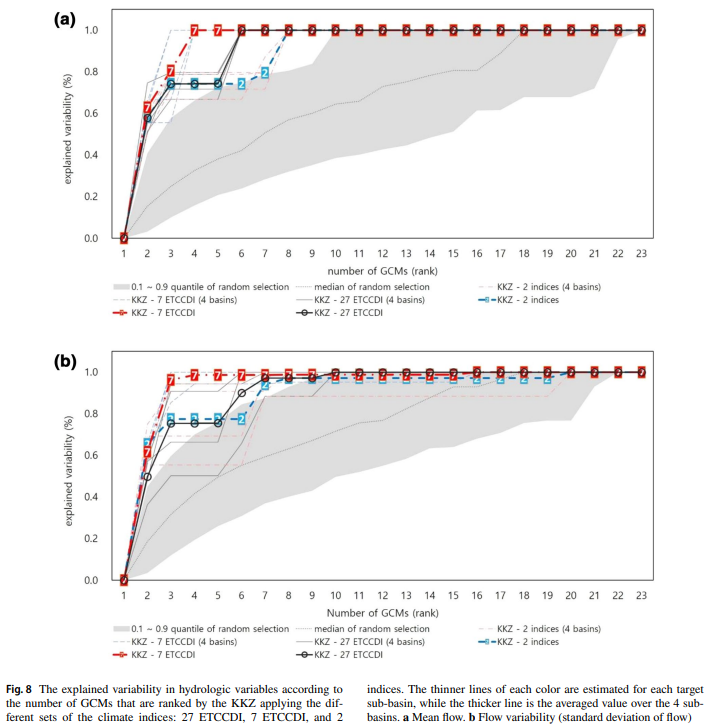
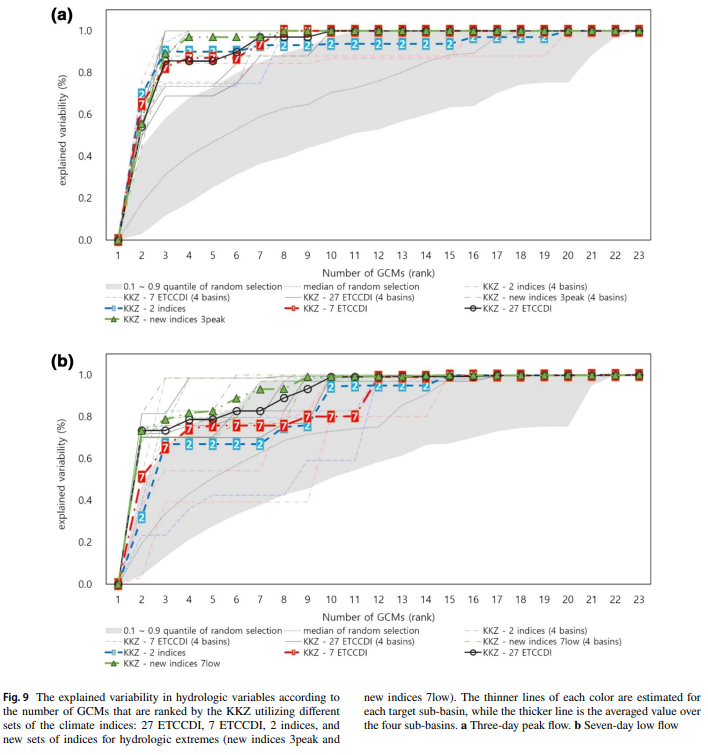
When selecting a subset of climate change scenarios (GCM models), the priority is to ensure that the subset reflects the comprehensive range of possible model results for all variables concerned. Though many studies have attempted to improve the scenario selection, there is a lack of studies that discuss methods to ensure that the results from a subset of climate models contain the same range of uncertainty in hydrologic variables as when all models are considered. We applied the Katsavounidis–Kuo–Zhang (KKZ) algorithm to select a subset of climate change scenarios. We demonstrated its ability to reduce the number of GCM models in an ensemble while the ranges of multiple climate extremes indices were preserved. First, we analyzed the role of 27 ETCCDI climate extremes indices for scenario selection and selected the representative climate extreme indices. Before selecting a subset, we excluded a few deficient GCM models that could not represent the observed climate regime. Subsequently, we discovered that a subset of GCM models selected by the KKZ algorithm with the representative climate extreme indices could not capture the full potential range of changes in hydrologic extremes (e.g., 3-day peak flow and 7-day low flow) in some regional case studies. However, applying the KKZ algorithm with a different set of climate indices, which are correlated to the hydrologic extremes, enabled the overcoming of this limitation. Key climate indices, dependent on the hydrologic extremes to be projected, must, therefore, be determined prior to the selection of a subset of GCM models.
Concluding mark
The key goal of this study is to identify an optimal approach for selecting a subset of climate change scenarios for regional impact assessments. We utilized the KKZ algorithm to effectively reduce the ensemble of General Circulation Models (GCMs) while maintaining the predicted climate variability. The KKZ algorithm, especially suitable for high-dimensional data like the 27 ETCCDI climate indices, enabled us to reduce the dimensionality of these indices. We found that a carefully chosen subset could represent the variable range of the entire set, particularly when indices exhibited multicollinearity. Before scenario selection, we removed models not reflecting the regional climate accurately. We then evaluated the selected scenarios for their ability to encapsulate potential uncertainty in hydrological changes. While average climate measures like mean streamflow were reliably projected using indices for overall climate, predicting hydrological extremes required a broader index set, like the ETCCDI suite. However, using a limited set of indices for scenario selection may not always capture the full spectrum of hydrological extremes, such as peak flows. This limitation can be addressed by employing climate indices more directly correlated with these extremes in the KKZ algorithm. Thus, specific hydrological extremes must be matched with corresponding climate indices to refine GCM selection. For instance, indices linked to floods would better inform models for 3-day peak flow projections, while drought-related indices would suit 7-day low flow assessments. Selecting appropriate climate indices is crucial and may be complex in regions with diverse hydrological responses, such as mixed rain, snow, and glacier-influenced systems. Canonical correlations between climate and hydrological indicator groups could guide the choice of core climate indices for a broad set of hydrological indicators. Careful selection considering the specific climate and hydrogeological characteristics of a region is vital. Further studies across various climates and hydrological settings are necessary to test the broader applicability of this method.
 EcoSphereYoung