Hydrological modeling uncertainty analysis for different flow quantiles: a case study in two hydro-geographically different watersheds
Authors:
Getachew Tegegne, Young-Oh Kim, Seung Beom Seo, and Youngil Kim
Published year:
2019
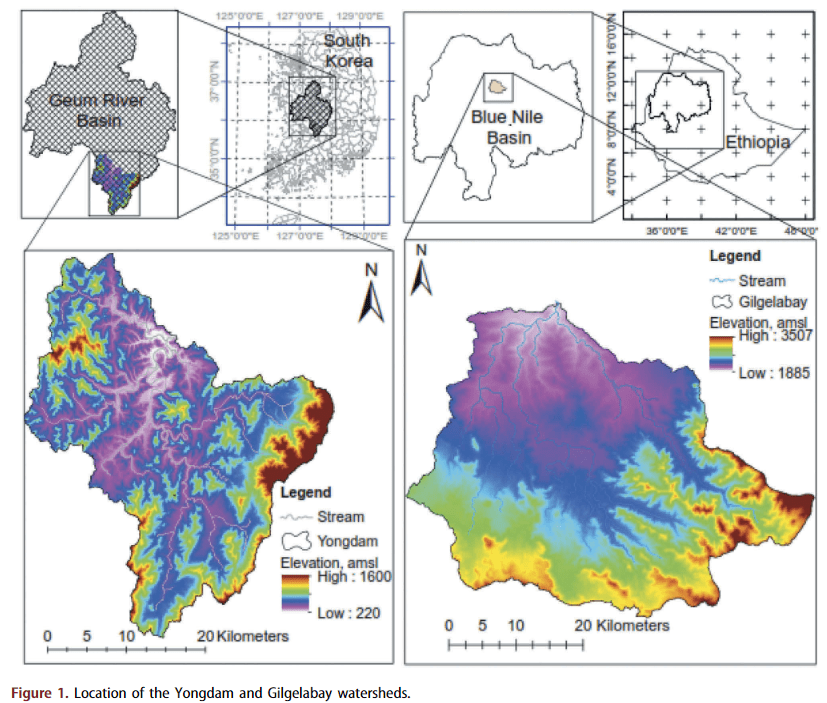
Research purpose
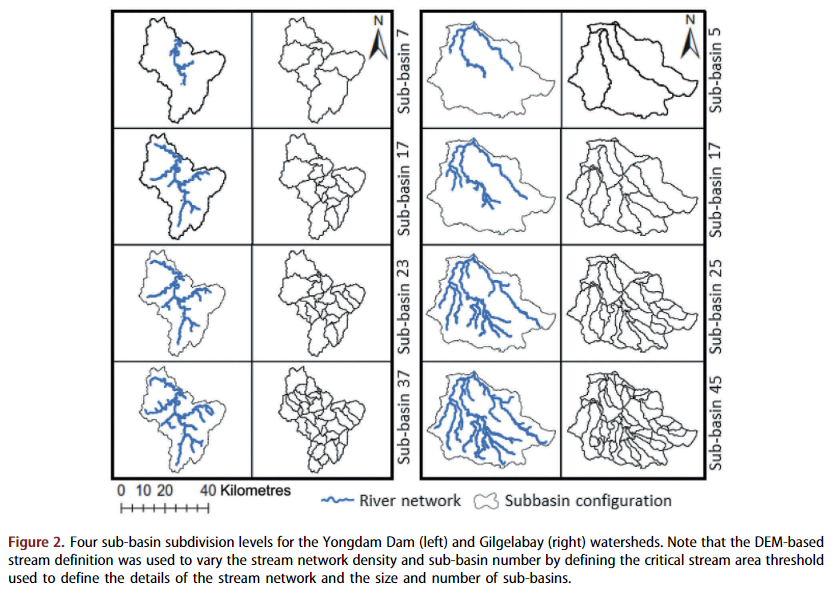
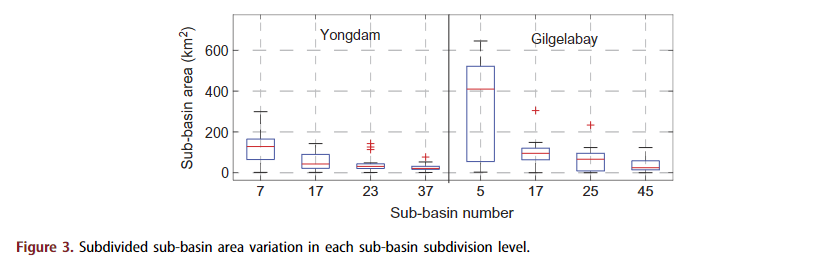
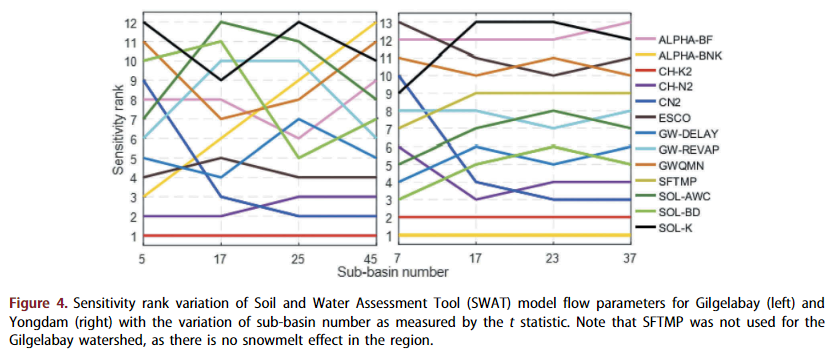
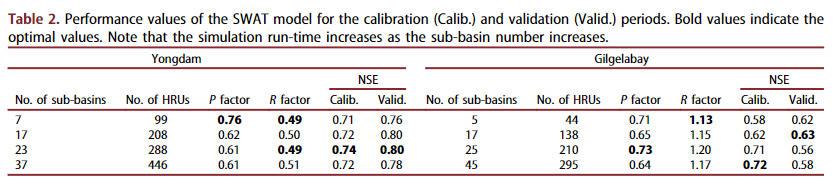
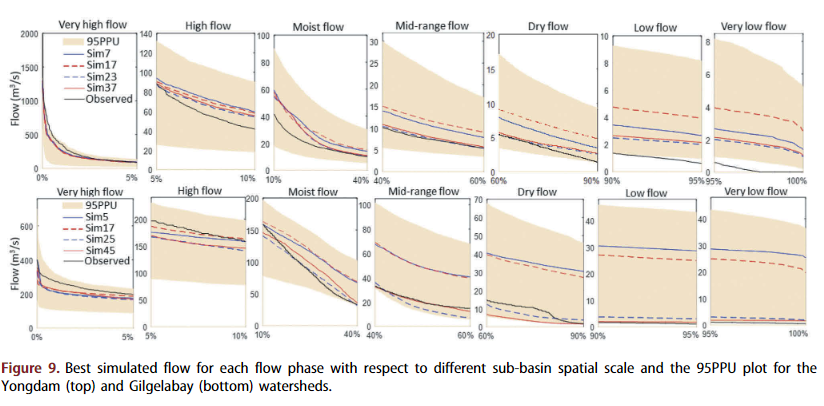
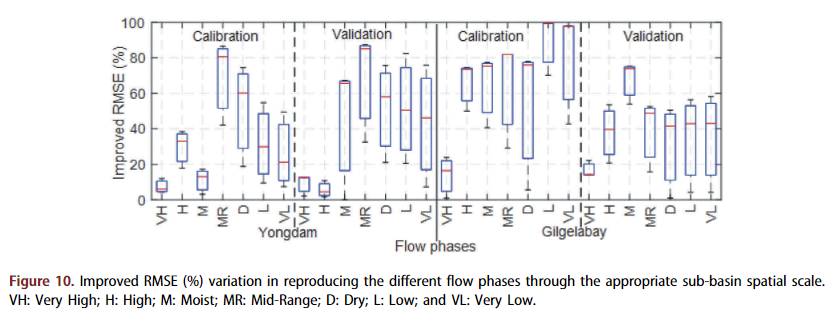
This study analyses hydrological model parameter uncertainty at varying sub-basin spatial scales. It was found that the variation in the sub-basin spatial scale had little influence on all the flow simulations. However, the different sub-basin spatial scales significantly impacted the reproduction of the flow quantiles. The coarser sub-basin spatial scale provided better coverage of most prediction uncertainty in observations. However, the finer sub-basin spatial scale produced the best single simulation output closer to the observations. In general, the optimal sub-basin spatial scales (ratio to the entire watershed size) in the two test watersheds were found to be 14–19% and 2–4% for good simulation of high and low flows, respectively. It is, therefore, worthwhile to put more effort into reproducing different flow quantiles by investigating an appropriate sub-basin spatial scale.
Concluding mark
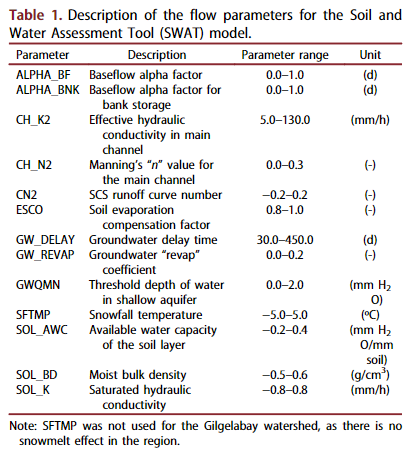
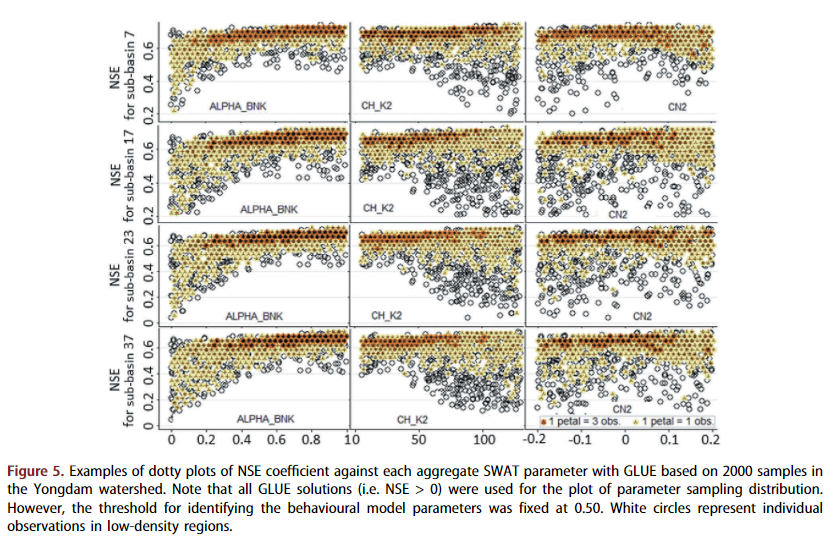
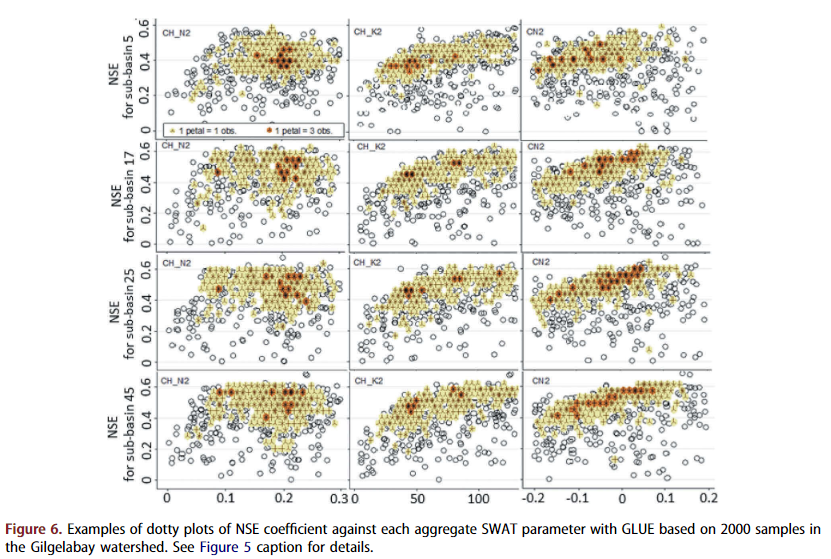
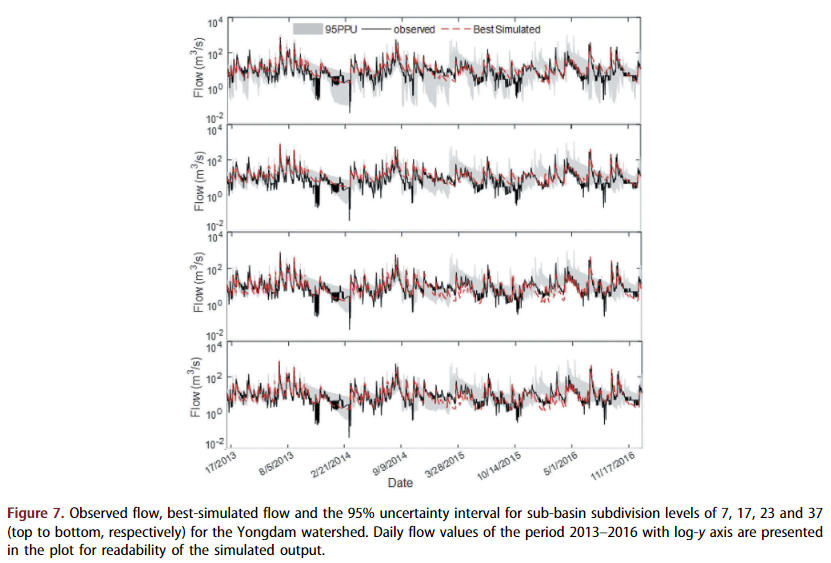
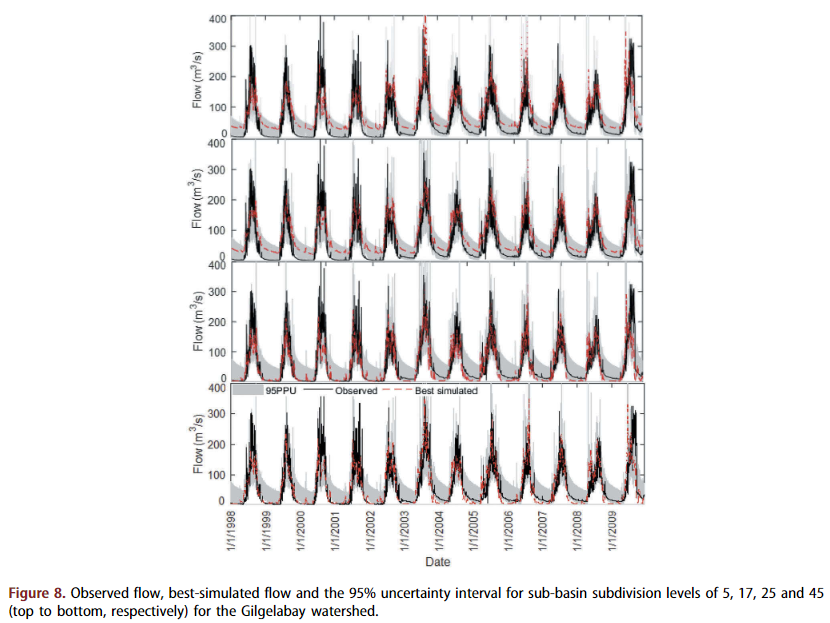
This study examines uncertainties in hydrological modeling, addressing input data errors, model parameters, structural choices, and spatial resolution. We applied the Generalized Likelihood Uncertainty Estimation (GLUE) to evaluate parameter uncertainties within the Soil and Water Assessment Tool (SWAT). Our focus was the Flow Duration Curve (FDC) across two watersheds, Yongdam in South Korea and Gilgelabay in Ethiopia, representing different management and data quality conditions. We analyzed how changing spatial scales of SWAT’s smaller units affects uncertainties. Findings suggest that sub-basin scale changes minimally impact hydrograph reproduction but significantly affect the simulation of different flow phases. The GLUE method showed that a coarser spatial scale better captured the observed hydrograph within the 95% Prediction Uncertainty Interval (95PPU), with a narrower 95PPU width, highlighting the influence of spatial scale, management, and data precision on modeling uncertainties. This contributes to improving the accuracy of hydrological models and understanding hydrological systems.
 EcoSphereYoung