Correcting Multivariate Biases in Regional Climate Model Boundaries: How Are Synoptic Systems Impacted Over the
Australian Region?
Authors:
Youngil Kim, Jason Evans, and Ashish Sharma
Published year:
2024

Research purpose
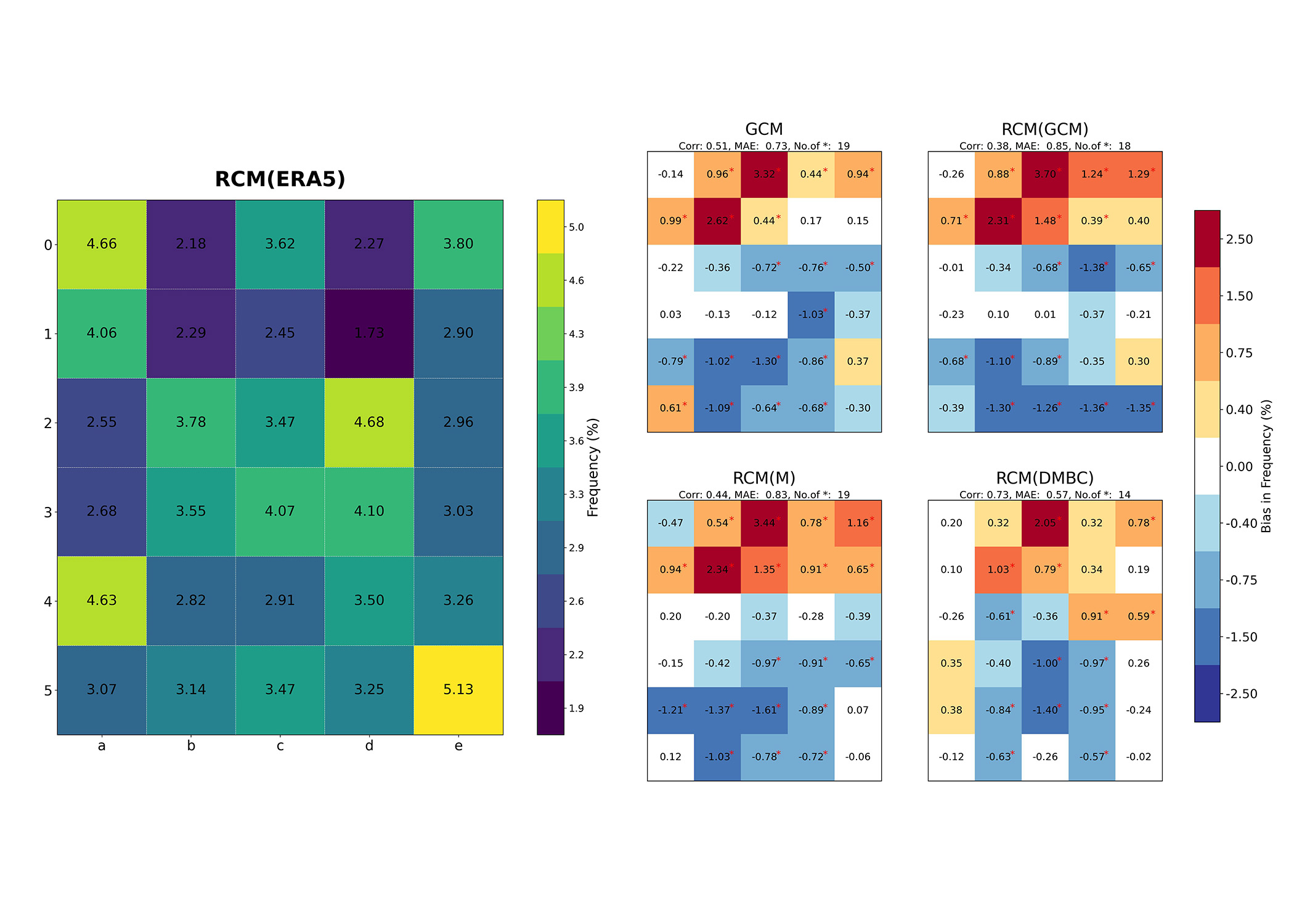
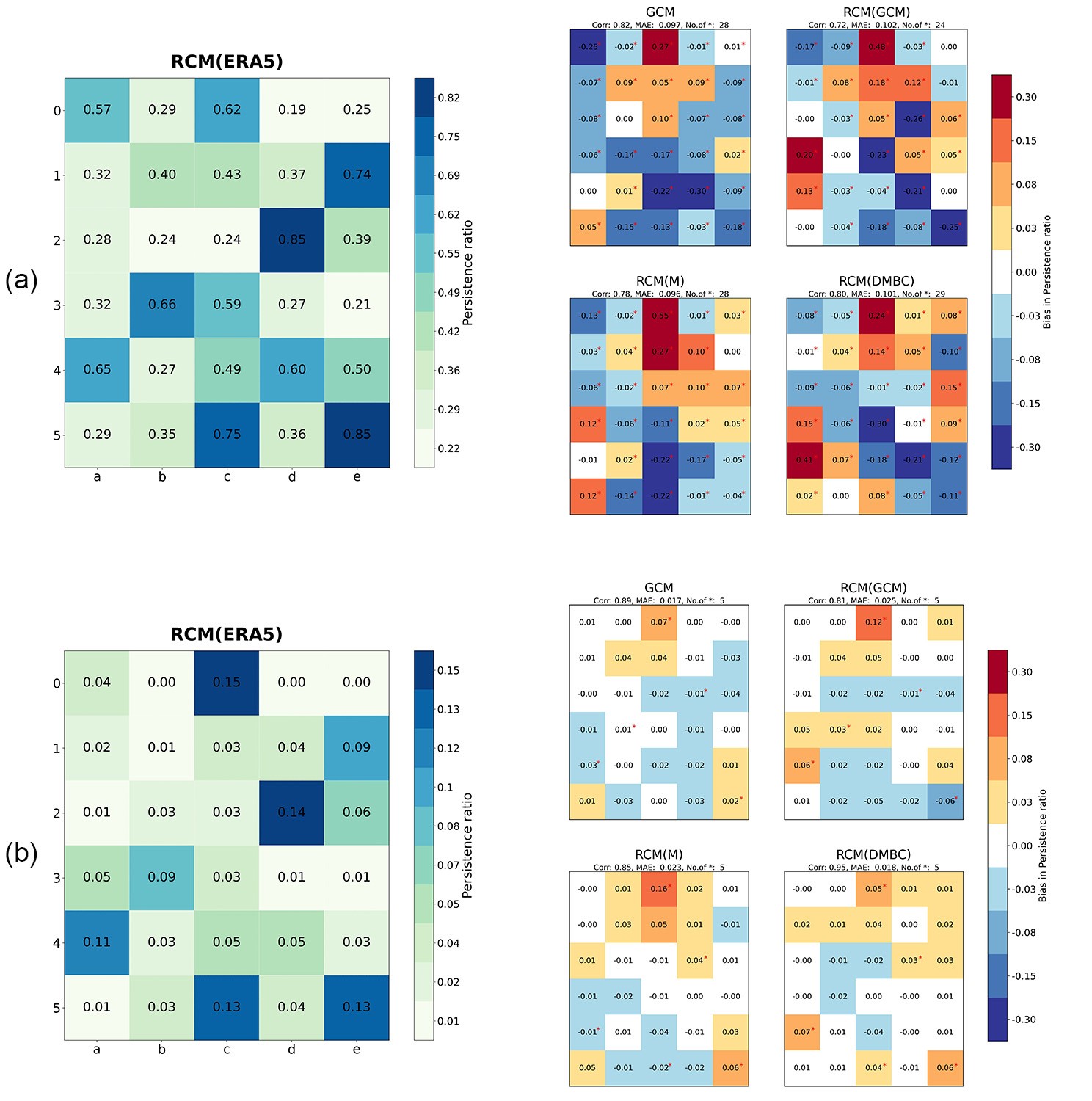
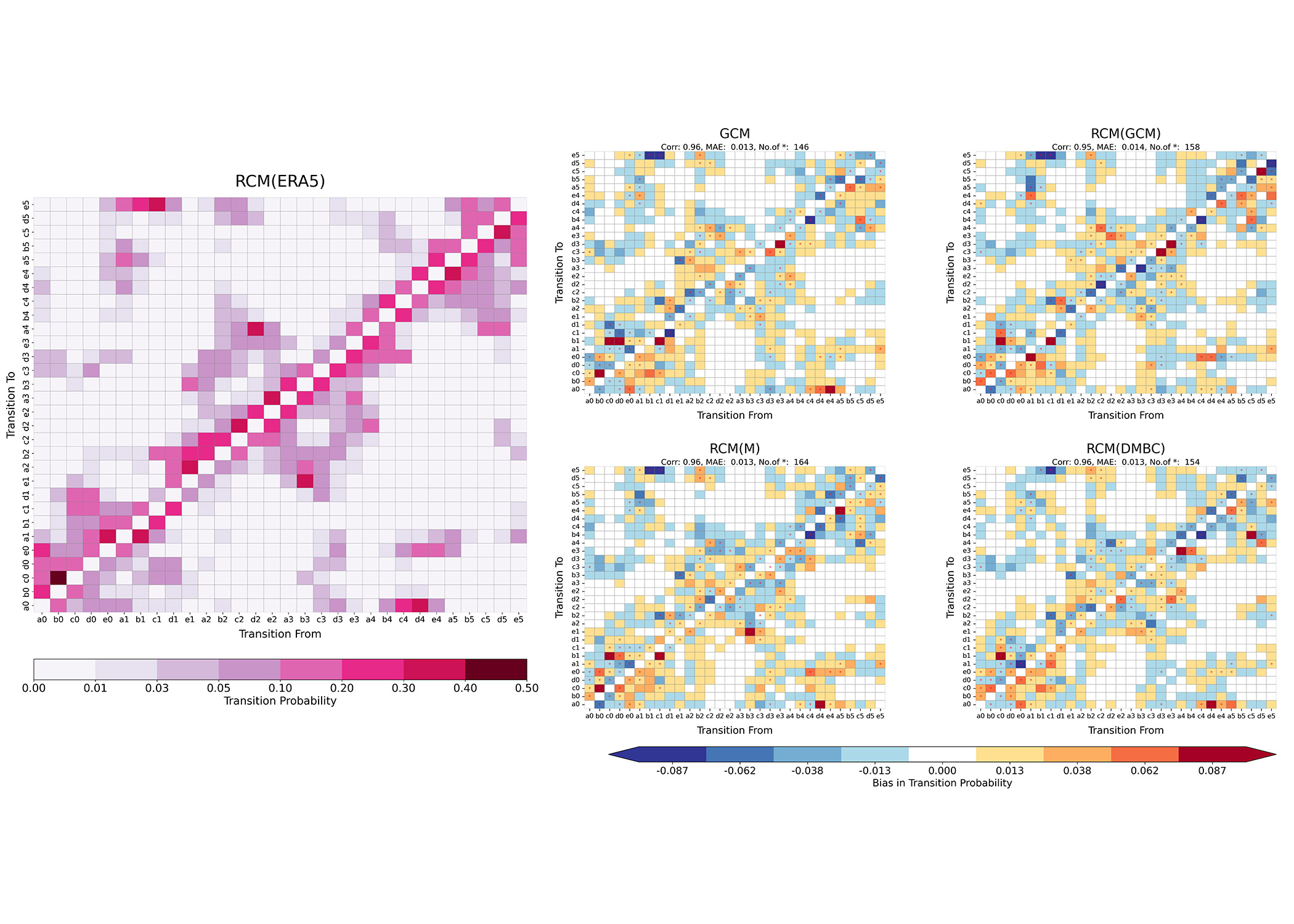
Synoptic climatology, which connects atmospheric circulation with regional environmental conditions, is pivotal to understanding climate dynamics. While regional climate models (RCMs) can reproduce key mesoscale precipitation patterns, biases related to synoptic circulation from the driving model, typically global climate models (GCMs), often remain unaddressed. This study examines the influence of correcting systematic bias in RCM boundaries on the representation of Australian synoptic systems. We utilize a structural self‐organizing map to evaluate the frequency, persistence, and transitions of daily synoptic systems. Our findings reveal that an RCM with multivariate bias‐corrected boundaries improves the representation of
synoptic systems compared to the driving GCM, or an RCM with uncorrected or simply bias‐corrected boundaries, particularly in reference to the frequency of systems identified. This demonstrates that appropriately correcting RCM boundary conditions helps correct many of the circulation errors inherited from the driving GCM but not all.
Concluding mark
This study evaluates the impact of multivariate bias correction on Regional Climate Model (RCM) boundary conditions in simulating daily synoptic systems. Using the Weather Research and Forecasting (WRF) model driven by the ACCESS-ESM1.5 Global Climate Model (GCM), the findings demonstrate that bias correction enhances the accuracy of synoptic circulation simulations over Australia. Specifically, bias-corrected RCM (RCM(DMBC)) achieves higher correlation coefficients (up to 0.95) for long-lasting events, effectively addressing persistence biases and improving the representation of synoptic system frequency and distribution. This study highlights that while bias correction reduces errors introduced by GCMs, fundamental biases persist, emphasizing its role in improving statistical realism rather than rectifying intrinsic GCM flaws. By enhancing the physical consistency of boundary conditions, the approach supports better simulation of regional climates, particularly in extreme events, underscoring the need for continued improvements in climate modeling frameworks.
 EcoSphereYoung