A software for correcting systematic biases in RCM input boundary conditions
Authors:
Youngil Kim, Jason Evans, and Ashish Sharma
Published year:
2023
Research purpose
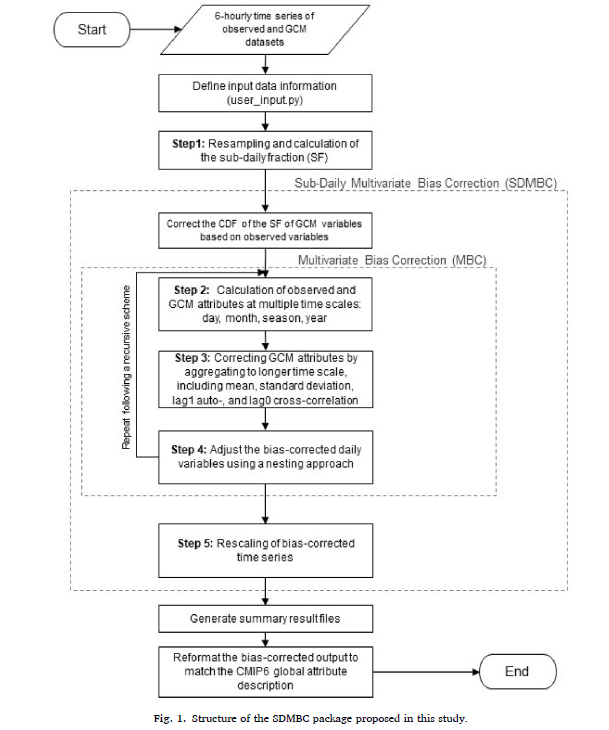
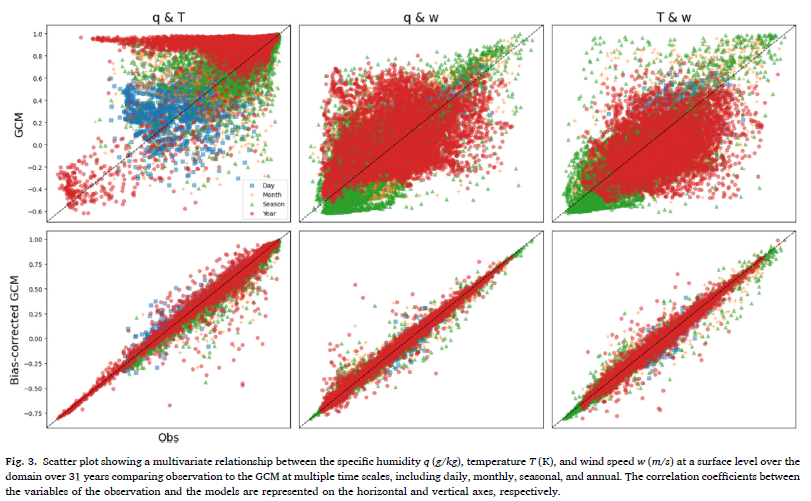
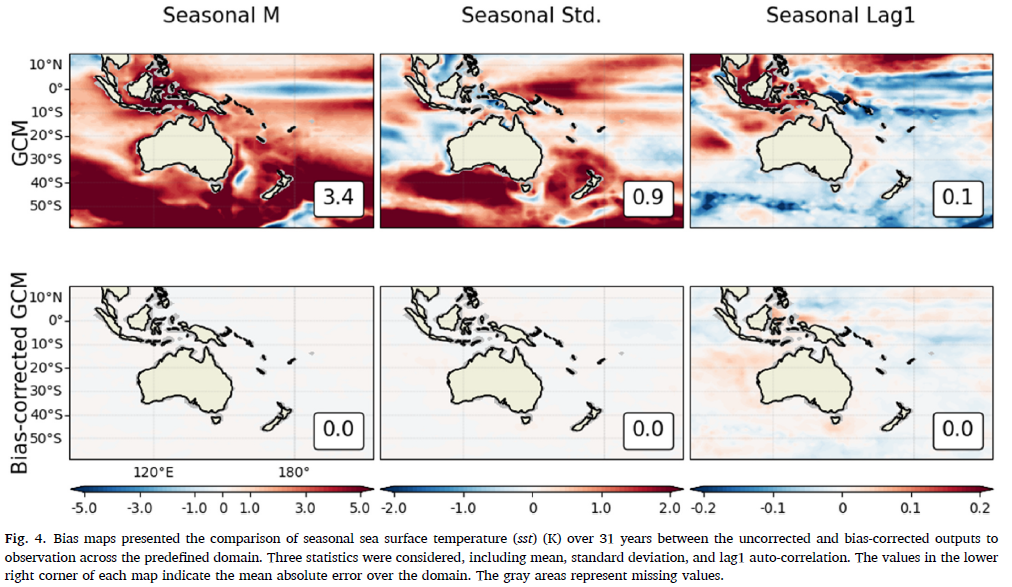
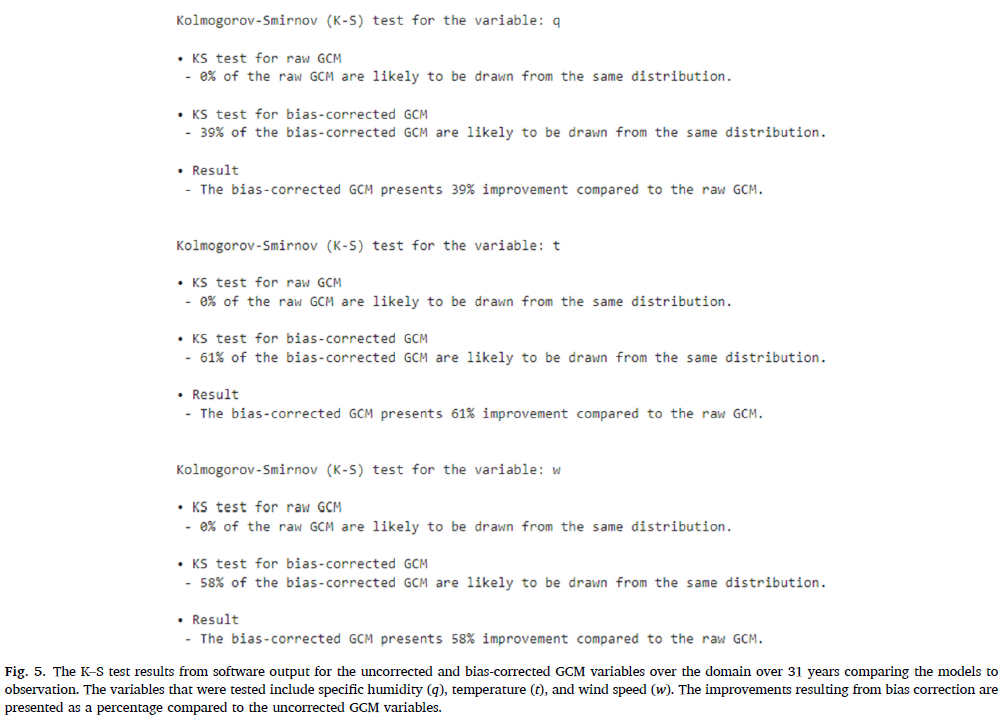
Bias-correction approaches have been widely applied to Global Climate Model (GCM) or Regional Climate Model (RCM) outputs in order to overcome the limitations of climate models in resolving small-scale climate features. Although various software toolkits have been developed to simplify the process for correcting climate model output directly, they were specifically designed to correct surface fields such as precipitation and temperature, often overlooking the physical mechanisms between variables. To address these limitations, this study developed open-source Python software that corrects RCM input boundary variables using reanalysis and raw GCM datasets as inputs. The bias correction technique used is based on a novel approach, Sub-Daily Multivariate Bias Correction (SDMBC), which corrects the inter-variable relationships and distribution of atmospheric variables at a sub-daily time scale. This paper describes the software package, which simplifies the implementation of the bias correction process, and provides a simple example of its application.
Concluding mark
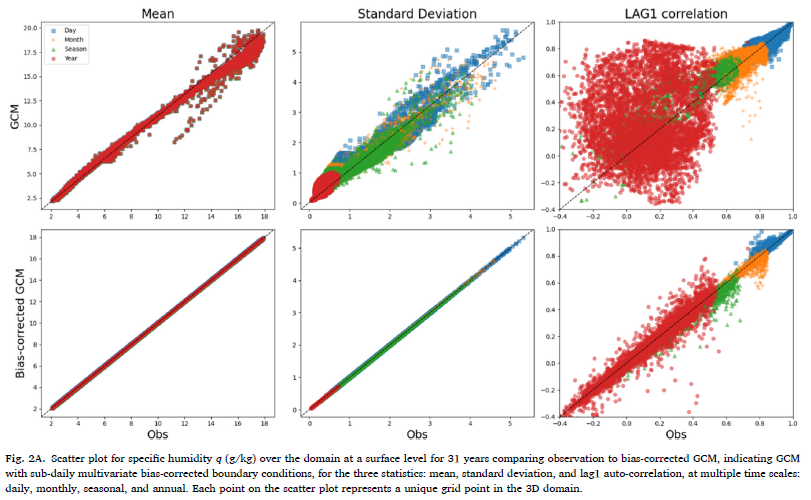
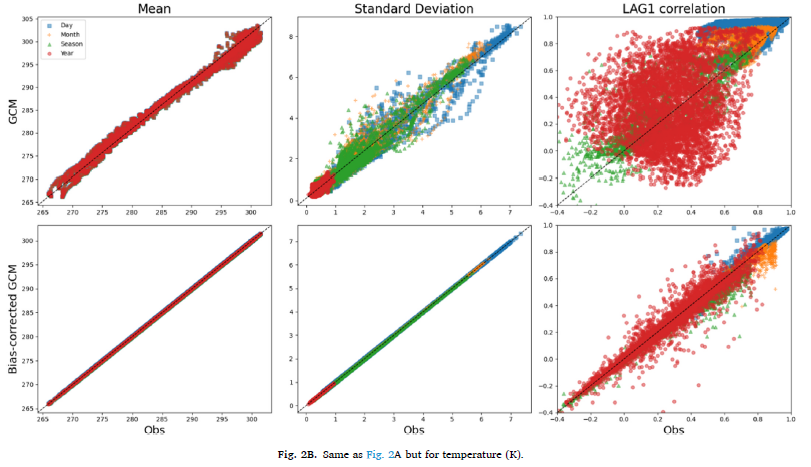
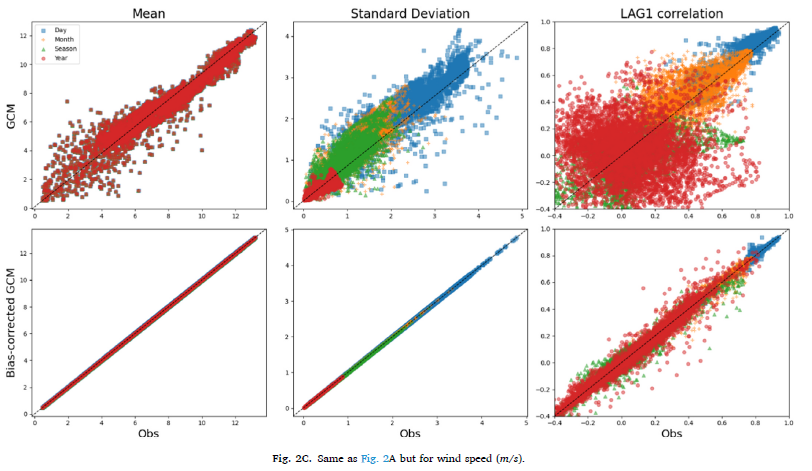
This study developed a Sub-Daily Multivariate Bias Correction (SDMBC) software package in Python. The primary bias correction method has been proposed by (Kim et al., 2023a) and corrects the full atmospheric fields and sea surface temperature of GCM datasets prior to dynamical downscaling. It aims to remove biases in the RCM input (lateral and lower) boundary conditions, ultimately improving the accuracy of RCM simulations. It has shown a generally better representation of the diurnal range of rainfall magnitude compared to multivariate bias correction. The software package described in this study simplifies the implementation of the bias correction process, and its applications and capabilities are demonstrated using a sample dataset. The flexibility of the software and ease of use make it suitable for practitioners carrying out impact assessments and researchers investigating downscaling methods. In summary, this research provides insights and tools for improving the performance of RCM simulations, supporting better decision-making and adaptation strategies for decision-makers in the climate change impacts community.
 EcoSphereYoung