Selecting hydrologic modeling approaches for water resource assessment in the Yongdam watershed
Authors:
Getachew Tegegne, Dong Kwan Park, Youngil Kim, Young-Oh Kim
Published year:
2017
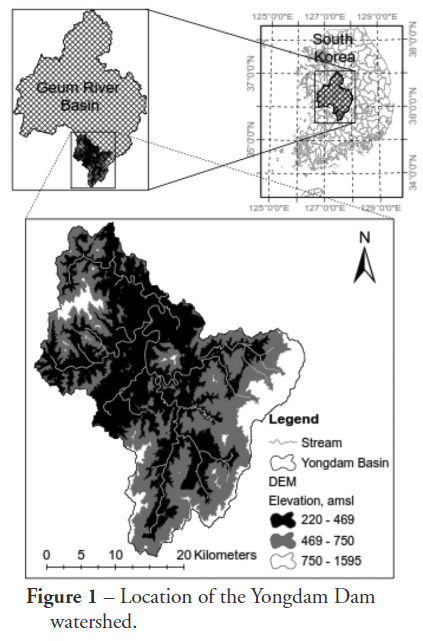
Research purpose
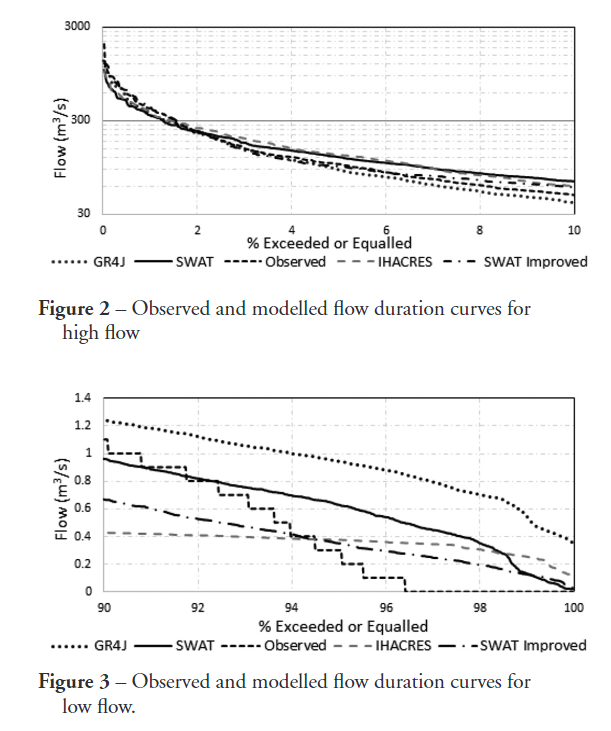
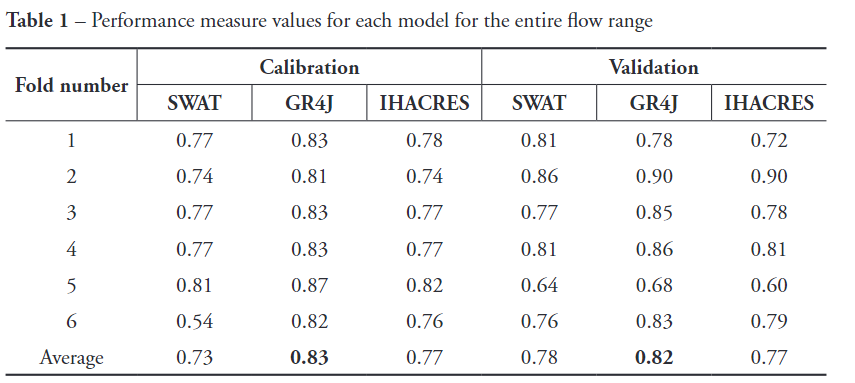
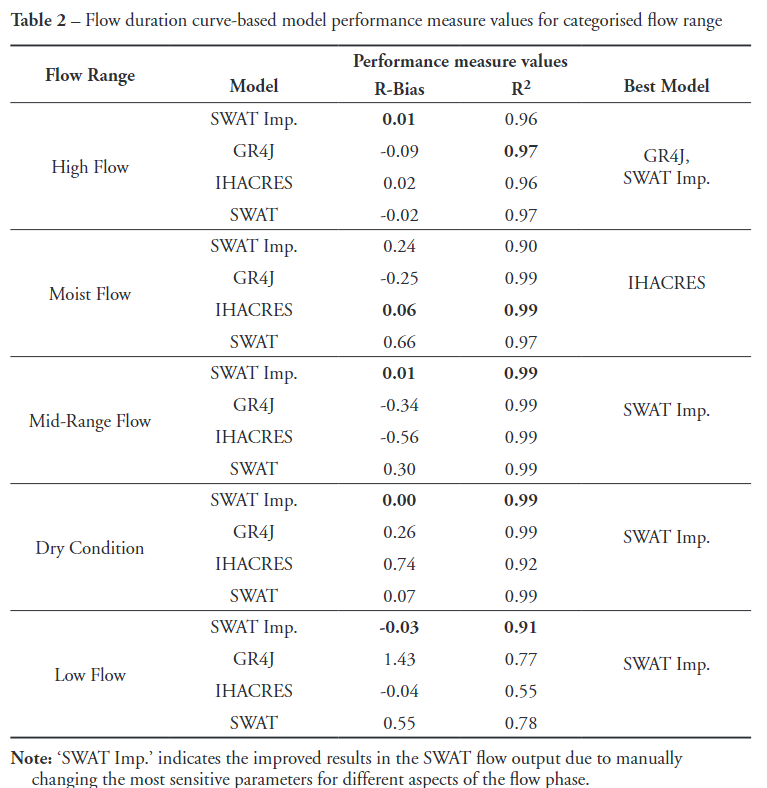
Robust hydrologic models are needed to help manage water resources under a changing climate. This paper assessed daily streamflow predictions by applying two simple conceptual models (IHACRES and GR4J) and one physically-based, semi-distributed model (SWAT) for the Yongdam Dam watershed. We compared these models’ capabilities in reproducing observed streamflow in the time and quantile domains. The calibration and validation of the three models were performed using 13-year daily datasets and the k-fold cross-validation method. The Particle Swarm Optimization algorithm was used to optimize flow parameters for the more complex model, whereas the Shuffled Complex Evolution algorithm was used to calibrate the two simpler models. Global sensitivity analysis was performed for the complex model to reduce the number of flow parameters; the effective hydraulic conductivity in main channel alluvium was the most sensitive parameter, followed by the baseflow alpha factor for bank storage. The results showed that GR4J was slightly better than SWAT and IHACRES, and IHACRES had equivalent model performance to SWAT, with respect to the day-to-day flow comparison focused on reproducing the exact observed discharge hydrograph. However, SWAT performed best for reproducing the frequency distribution curve. Furthermore, SWAT performance was improved for each flow range of the flow duration curve by manually changing the most sensitive model parameters. The results generally revealed that a multi-model ensemble approach with SWAT and either GR4J or IHACRES should be utilized for regional water resources assessment in the Yongdam watershed.
Concluding mark
Our study carefully compared three hydrological models: GR4J and IHACRES, which are simple rainfall-runoff models, and SWAT, a more complex one. Our main goal was to see how well these models performed regarding time and flow conditions. The time-based analysis consistently found that GR4J performed better than SWAT and IHACRES. However, we discovered something interesting when we looked at different flow conditions. SWAT, when we manually adjusted specific settings to match various types of flow, showed significant improvements. It performed better in simulating high flow, mid-range flow, dry conditions, and low flows compared to the simpler GR4J and IHACRES models. But, the conceptual models were better at simulating moist flow conditions. All three models managed to capture the streamflow patterns in the Yongdam watershed quite well, without one model clearly outshining the others overall. On a daily basis, both GR4J and IHACRES performed similarly to the more complex SWAT model. Furthermore, we noticed that GR4J and IHACRES had strong positive relationships in their outcomes, whereas these two models had weaker connections with SWAT. Based on these findings, we suggest using a combination of the SWAT model with either GR4J or IHACRES for regional water resource assessment. This approach harnesses the strengths of both simple and complex models, providing a robust framework to study the complex behavior of hydrological systems.
 EcoSphereYoung