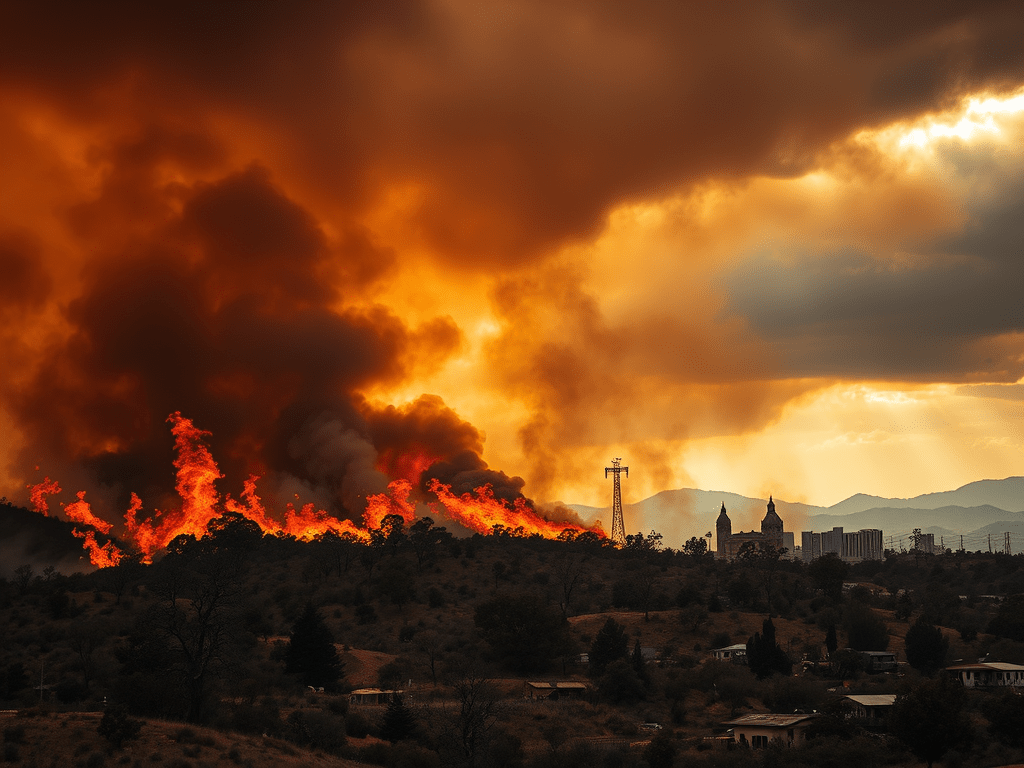
Recent wildfire events in Victoria, Australia, and Los Angeles, USA, have highlighted the intensifying frequency and ferocity of fires in a warming world. These incidents serve as stark reminders of the urgent need for global climate action to mitigate the cascading effects of rising temperatures on ecosystems, communities, and economies.
Victoria’s Bushfires: A Nation Scorched
In Victoria, the Grampians National Park and Otway Ranges bore the brunt of destructive fires. The Grampians blaze, which raged for 21 days, consumed over 76,000 hectares, destroying four homes and claiming countless livestock. Firefighters, aided by a fortunate change in weather, managed to contain the inferno, but not before irreversible damage was done to the park’s biodiversity and cultural heritage.[Link]
Similarly, in the Otway Ranges, an unattended campfire ignited a fire that forced the evacuation of 150 campers and destroyed 14 hectares of pristine forest. While swift firefighting efforts prevented greater devastation, this incident underscores the role of human negligence amidst an already perilous fire-prone environment.[Link]
Los Angeles Firestorm: A City in Crisis
Across the Pacific, Los Angeles faced its own firestorm, with blazes claiming five lives and destroying or damaging over 2,000 structures. Iconic locations such as Sunset Boulevard and Hollywood Boulevard were caught in the path of destruction, leaving an indelible mark on the city’s cultural and economic landscape.
The Palisades and Eaton fires have consumed over 25,000 acres together, with strong winds and dry conditions fueling its rapid spread. Despite the efforts of over 7,500 firefighters, containment proved difficult, a grim testament to the increasing challenges posed by climate-induced extreme weather events.[Link]
The fires also impacted Hollywood, with several celebrities losing their homes, including Paris Hilton and Anthony Hopkins. Beyond the personal losses, the economic damage is estimated to exceed $50 billion, making this one of the costliest disasters in Los Angeles history.[Link]
Climate Change: The Common Denominator
The connection between climate change and the severity of these wildfires is undeniable. Rising global temperatures, prolonged droughts, and shifting weather patterns have created a perfect storm for extreme fire conditions. Research from the IPCC highlights that regions like southeastern Australia and southern California are particularly vulnerable due to their unique climatic and ecological conditions.
The Victoria fires occurred during a heatwave with temperatures reaching 45°C, while Los Angeles faced similar conditions, exacerbated by the infamous Santa Ana winds. According to the Climate Council, the number of days classified as having “extreme fire danger” has increased by 30% in Australia since the 1970s. In the United States, similar trends are documented, with the National Interagency Fire Center reporting a doubling of large fires in the western states over the past 40 years.
The Ripple Effects of Wildfires
Beyond the immediate devastation, these fires contribute to a dangerous feedback loop. Wildfires release massive amounts of carbon dioxide into the atmosphere, amplifying global warming. The 2019–2020 Black Summer fires in Australia alone emitted 715 million tons of CO2, equivalent to an entire year of the country’s industrial emissions. The Los Angeles fires are expected to add significantly to this tally, compounding the climate crisis.
A Sobering Reflection
The devastating wildfires in Victoria and Los Angeles are not isolated events; they are symptomatic of a world grappling with the realities of climate change. While the resilience of communities and the bravery of emergency responders deserve commendation, these efforts must be supported by robust policies that address the root causes of climate-driven disasters. The time for decisive action is now, as the stakes—lives, ecosystems, and livelihoods—could not be higher.
 EcoSphereYoung
Leave a comment