Our planet’s equilibrium is delicate, a balance that, once disrupted, can lead to global tipping points—critical thresholds that, when crossed, result in significant, often irreversible changes. These tipping points are not confined to environmental issues alone but span across ecosystems, economies, and societal structures. Understanding, identifying, and navigating these thresholds is crucial for sustaining life on Earth as we know it. This exploration aims to demystify global tipping points, emphasizing their importance and the collective actions required to avert potential crises.
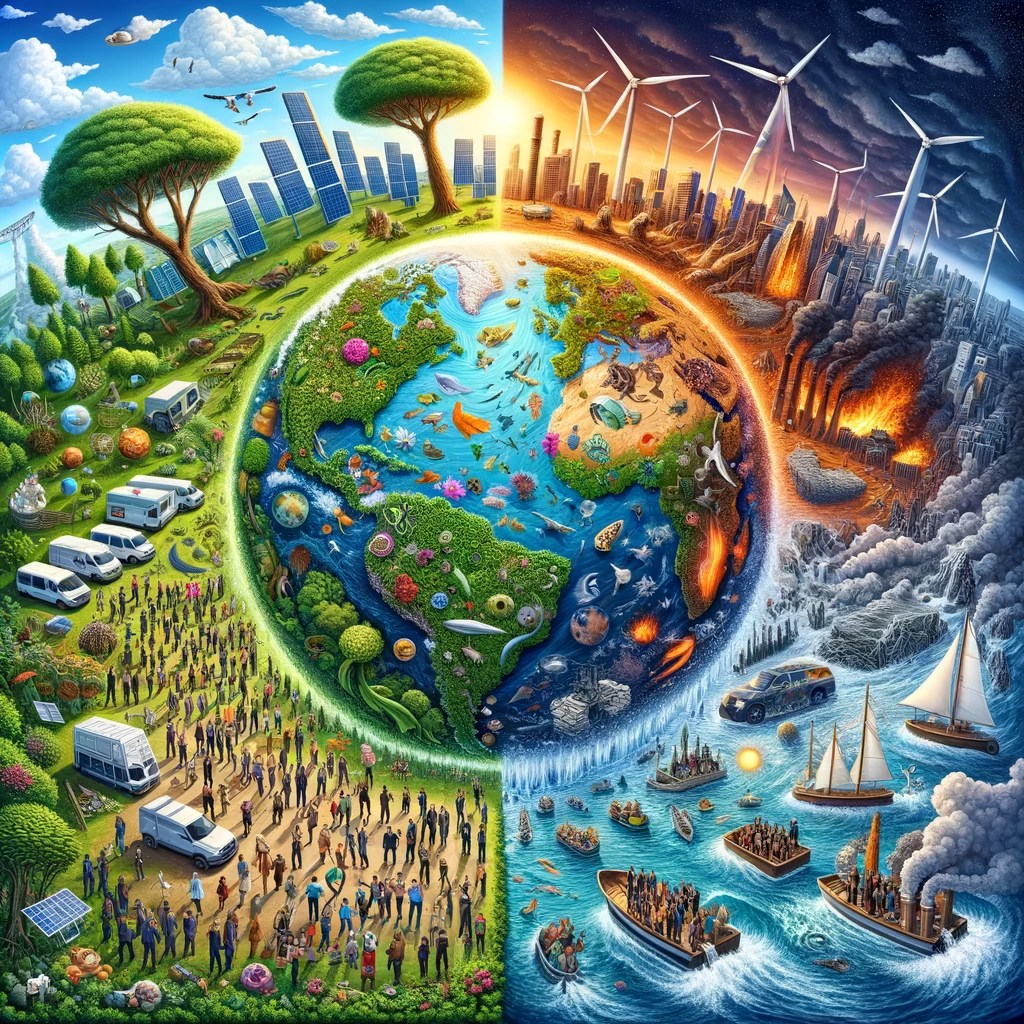
Defining Tipping Points
Tipping points are moments when minor changes escalate into a significant shift, fundamentally altering system dynamics. The Intergovernmental Panel on Climate Change (IPCC) defines them as critical thresholds that, once exceeded, result in abrupt and irreversible changes. These can range from the collapse of ice sheets to the dieback of forests, each with profound implications for the planet’s future. Recognizing these points is the first step in preventing irreversible damage to our planet.
Why Are Tipping Points Important?
Tipping points signify drastic system changes that can have far-reaching impacts on climate, biodiversity, and human societies. Their importance lies in the abruptness and irreversibility of these changes, challenging our adaptive capacities. From the rapid melting of polar ice caps to the destabilization of ocean currents, tipping points can drastically change living conditions on Earth, making their study and understanding essential for future planning and action.
Experiencing Tipping Points
Notable examples of tipping points include the Amazon Rainforest’s transformation from a dense, moisture-rich ecosystem to a savannah, disrupting global carbon cycles and biodiversity. Similarly, the potential halt of the Atlantic Meridional Overturning Circulation (AMOC) could drastically alter climate patterns across the globe. The melting of the Greenland and Antarctic ice sheets poses another critical tipping point, threatening global sea-level rise with unprecedented impacts on coastal communities worldwide.
The Future Ahead
Recent studies indicate that some tipping points could be reached with less than 2°C of global warming, a scenario within the bounds of the current climate trajectory. This revelation underscores the urgency of immediate, robust action to mitigate climate change and avoid these critical thresholds. The path forward requires a significant reduction in greenhouse gas emissions, alongside efforts to preserve and restore key ecosystems and biodiversity.
Mitigation Strategies
Mitigating the risk of crossing tipping points involves a multi-faceted approach, including transitioning to renewable energy sources, conserving and restoring forests, and innovating in carbon capture and storage technologies. These actions aim to reduce atmospheric CO2 levels and stabilize global temperatures, keeping them within limits that prevent the activation of tipping points.
- Transition to Renewable Energy: Shift from fossil fuels to renewable energy sources like solar, wind, and hydro power to reduce greenhouse gas emissions.
- Forest Conservation and Restoration: Protect existing forests and reforest degraded areas to enhance carbon sequestration.
- Sustainable Agriculture: Implement practices that reduce emissions, such as crop rotation, reduced tillage, and organic farming.
- Green Infrastructure: Develop infrastructure that supports sustainable energy use, water conservation, and reduces carbon footprint.
- Carbon Capture and Storage (CCS): Invest in CCS technologies to remove CO2 from the atmosphere and store it underground safely.
- Reduce Consumption: Encourage reduced consumption and waste, promoting a more sustainable lifestyle and economy.
- Policy and Regulation: Implement and enforce policies that limit carbon emissions and promote sustainability at local, national, and global levels.
Adaptation Measures
Adaptation strategies focus on enhancing societal and ecological resilience to already underway changes. This includes building climate-resilient infrastructure, promoting sustainable agricultural practices, and fostering community preparedness and education. International collaboration and policy alignment are crucial in these efforts, ensuring a coordinated response to the global challenge of climate change.
- Climate-Resilient Infrastructure: Build infrastructure capable of withstanding extreme weather events and sea-level rise.
- Water Management: Develop systems for efficient water use and protection against floods and droughts.
- Sustainable Agriculture Practices: Adapt farming techniques to changing climate conditions, such as drought-resistant crops and efficient irrigation.
- Community Preparedness: Educate communities on disaster risk reduction, emergency preparedness, and sustainable practices.
- Ecosystem Protection and Restoration: Maintain and restore ecosystems that provide natural barriers to climate impacts, such as mangroves and wetlands.
- Healthcare and Disease Prevention: Strengthen healthcare systems to deal with climate-related diseases and ensure access to clean water and sanitation.
- International Cooperation: Collaborate on global initiatives and share knowledge and technologies to adapt to climate change collectively.
Conclusion
As guardians of our planet, we face the monumental task of averting the crossing of global tipping points through informed, decisive action. Understanding these thresholds and their implications allows us to navigate the complexities of Earth’s systems, fostering a sustainable coexistence with our environment. The choices we make today will shape the legacy we leave for future generations, making it imperative to act with foresight and responsibility.
 EcoSphereYoung
Leave a comment